

Last Updated: November 5, 2026
Quick Summary
Comfortable workwear for pregnant women needs a waistband that adjusts without falling down, fabric that moves with you, and a cut that still looks professional. Look for a high or adjustable rise that sits over the bump, mid-weight cotton stretch that recovers its shape, and an elastic or adjustable back waistband.
- Plan your buying around each trimester rather than one big shop, so it costs less and fits better.
- Start with two pairs of work pants in neutral colours, then add three breathable tops.
- Try work pants on late in the day and sit, squat and reach before deciding.
- For active jobs, choose cotton-stretch drill with twin-needle stitching at the crotch for strength.
- Buy for the stage you are in now and size up as you go, not for the third trimester on day one.
Table of Contents
- Why Standard Workwear Stops Working in Pregnancy
- Maternity Workwear by Trimester: What Changes and When
- What to Look for in Maternity Work Pants
- Maternity Work Outfits: Building a Capsule That Covers Every Role
- Maternity Clothes for Active Jobs: Standing, Bending and Moving All Day
- Fabric, Fit and Care: Getting More Wear From Each Garment
- Choosing Your First Pair of Pregnant-Friendly Work Pants
- Frequently Asked Questions
Why Standard Workwear Stops Working in Pregnancy
Most workwear is cut for a body that doesn't change shape. Pregnancy changes everything: your centre of gravity shifts, your ribcage expands, and a waistband that sat comfortably last month now digs in by morning tea. The problem isn't that standard gear is badly made. It's that it was never designed for a body in transition.
Comfortable workwear for pregnant women has to solve three problems at once: a waistband that adjusts without falling down, fabric that moves with you through bends and reaches, and a cut that still looks professional on site or in the office. Standard men's or unisex workwear, even sized down, fails on all three.
Maternity workwear is a different design problem from standard workwear, and it needs a different answer.
Maternity Workwear by Trimester: What Changes and When
Maternity workwear by trimester follows a predictable arc: the first trimester is mostly about softness and nausea-friendly fits, the second is about adjustable waists as your bump grows, and the third is about support, breathability and easy on-off.
In the first trimester, you may not look pregnant yet, but bloating and tenderness make tight waistbands unbearable. Loose tops and pants with some give get you through. By the second trimester, your bump is real and a fixed waistband stops cooperating. This is when adjustable or elastic-backed waists earn their keep. The third trimester brings the biggest shift: you need support under the bump, breathable fabric for long days, and garments you can get in and out of without a struggle.
Plan your buying around these stages rather than one big shop. It costs less and fits better at every point.
Here's how the job of getting dressed shifts across the three trimesters.
| Trimester | Main challenge | What workwear needs |
|---|---|---|
| First | Bloating and tenderness; bump not visible yet | Softness and nausea-friendly fits; loose tops, pants with give |
| Second | Bump is real; fixed waistband stops cooperating | Adjustable or elastic-backed waists |
| Third | Biggest shift; long days and hard on-off | Support under the bump, breathable fabric, easy on-off |
What to Look for in Maternity Work Pants
The best maternity work pants share four features: a high or adjustable rise that sits over the bump rather than across it, stretch fabric that recovers its shape, a waistband that stays put without pressure, and enough durability for the job.
Our High Rise Pants SKNY Flex 'Every Woman Utility' feature a high rise with a back elastic waistband, cotton-stretch drill fabric and multiple utility pockets.

A few things to check before you buy:
- Rise: high-rise styles sit over the bump; low-rise will cut across it.
- Waistband: look for elastic or adjustable backs, not fixed button flies alone.
- Fabric weight: mid-weight cotton stretch holds shape without feeling stiff.
- Pockets: you'll want them more than you think once bending gets awkward.
Size for comfort at your current stage, not the size you wore before.
Maternity Work Outfits: Building a Capsule That Covers Every Role
A maternity work outfits capsule is a small set of pieces that mix and match across your week, so you're not rebuilding your wardrobe every trimester. The aim is fewer pieces doing more work, and a shopping list you can prioritise rather than a full wardrobe replacement.
The prioritised shopping list
Buy in this order, and only move to the next tier when the one above is covered:
- Two pairs of work pants in neutral colours that suit your site or office, one high-rise stretch pair for everyday wear, one slightly looser pair for the days your bump feels tender.
- Three tops in breathable fabrics, loose through the middle, two plain, one with a bit more structure for meetings.
- One layer you can add or remove as temperatures shift, a soft jacket or overshirt that closes over a growing bump.
- Supportive footwear with a wide, stable base for long days on your feet.
- One dress or skirt if your role calls for it, cut to sit over the bump rather than across it.
That's enough for most roles. Everything after tier five is optional and should be bought only to fill a specific gap in your week.
Outfit formulas by dress code
Rather than starting from scratch each morning, build a small set of formulas and rotate them:
- Business formal: tailored work pants + structured top + longline layer + closed-toe flat. Keep colours to two or three so everything matches.
- Business casual: work pants + soft knit or blouse + optional overshirt. This is the most forgiving formula as your shape changes.
- Hybrid or home-heavy weeks: one pair of work pants + two comfortable tops covers video calls and the days you're in the office.
- Active or site-based roles: durable work pants + breathable top + layer for weather + high-visibility outerwear where your workplace requires it. Prioritise movement and pocket access over formality.
Adapting the capsule by trimester
In the first trimester, the same capsule works with your pre-pregnancy tops left loose over the waistband. By the second trimester, switch to the high-rise pants and let the tops drape rather than tuck. In the third trimester, add the layer as your main coverage piece and keep the base simple, fewer fastenings, easier on-off. As the base gets simpler and easier to manage, ergonomic pregnancy support can also come from a well-adjusted chair that keeps long workdays more comfortable.
Round out the capsule with seasonal layers so the same base pieces work across cooler and warmer months. The goal is fewer pieces doing more work, which also means less to replace as your body changes.
Buy tier by tier and size for the stage you're in.
High Rise Pants SKNY Flex ‘Every Woman Utility’ →
Maternity Clothes for Active Jobs: Standing, Bending and Moving All Day
Maternity clothes for active jobs need to survive real movement: kneeling, reaching, lifting and being on your feet for hours. Stretch is non-negotiable, but so is durability. Thin fabric that stretches nicely will wear through at the knees and seat far too fast.
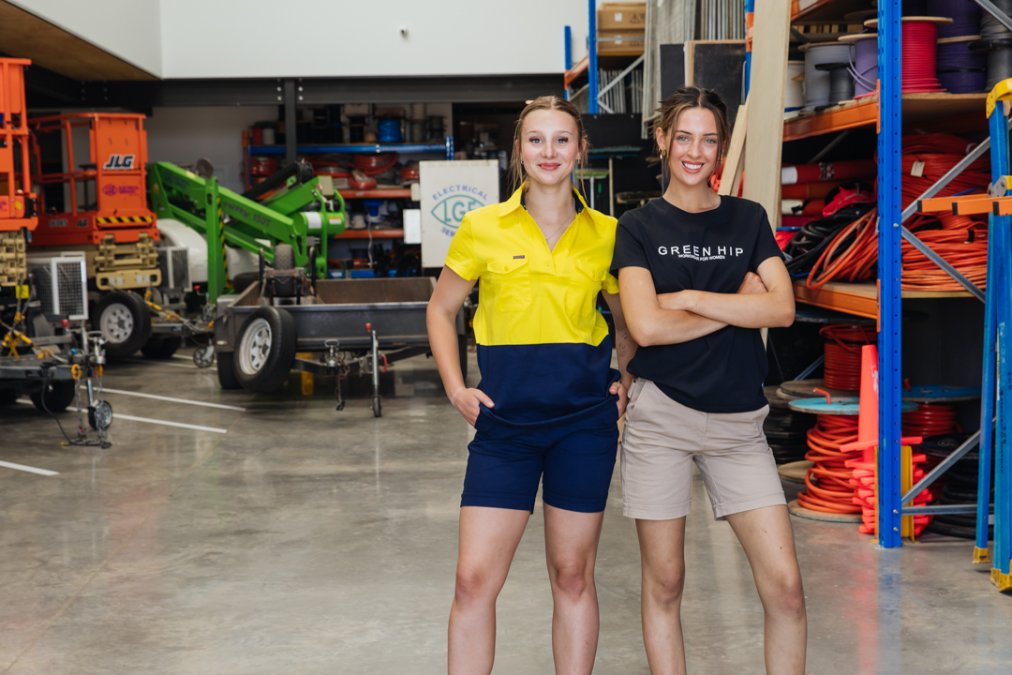
Our work pants use a cotton-stretch drill with twin-needle stitching at the crotch for extra strength, and carry a UPF 50+ rating. If your job is physically demanding, the durable workwear guide for active outdoor roles covers fabric and construction in more depth.
Fabric, Fit and Care: Getting More Wear From Each Garment
Fabric choice decides how a garment feels at 3pm on a long day. Look for a mid-weight drill with a small amount of spandex for give.
Reading the fabric before you buy
A few construction details tell you more than the label copy:
-
Weight: mid-weight cotton drill is the fabric weight used across the range.
-
Stretch and recovery: a small amount of spandex gives movement; the fabric should spring back when you pull it, not stay stretched.
-
Stitching at stress points: the crotch is sewn with twin needles for extra strength.
-
Waistband construction: an elastic or adjustable back with a flat front sits over the bump without pressure points.
Fit checks that save returns
Try work pants on late in the day, when bloating is at its peak, and sit, squat and reach before deciding. The waistband should stay put without digging in, the rise should clear the bump rather than cut across it, and the seat shouldn't pull when you bend. If you're between sizes, size for comfort at your current stage rather than the size you wore before pregnancy.
Care that protects stretch
Care extends the life of every piece, which lowers your cost per wear:
Cost per wear across a short period
Maternity workwear is worn for a limited window, so value comes from how many wears you get per garment and whether it keeps working after pregnancy. Count wears per week, multiply by the months you'll use it, and compare that against how the garment holds up, that's a more useful measure than the ticket price alone.
For a deeper look at fit and fabric across our range, our guide to the perfect pants for women walks through body shapes and construction details.
Choosing Your First Pair of Pregnant-Friendly Work Pants
Start with one pair you can wear right now, in a fabric and rise that suits your job. Don't buy for the third trimester on day one; buy for the stage you're in and size up as you go.
When you're ready to choose, browse our full range of work pants to compare rises, fabrics and pocket layouts. Pick the pair that matches your role first, then your style.
Frequently Asked Questions
What should I wear to work while pregnant?
Start with a soft, stretchy base: cotton-rich pants with an elastic or adjustable waist, a breathable top, and a light layer you can remove. Look for comfortable workwear that moves with you rather than fighting your shape. High-rise styles with a back elastic waistband, like Green Hip's SKNY Flex pants at $123.95, are one option to consider. Add flat, supportive shoes and keep a spare top at work for hot days.
When should I switch to maternity work clothes?
Most women find regular waistbands become uncomfortable somewhere in the first trimester, often earlier with a second pregnancy. Switch when fastening, bending or sitting for long stretches feels restrictive rather than waiting for a specific week. Buying pants with an adjustable or elastic waist early means they keep fitting as your shape changes, so you get more wear from one purchase across all three trimesters.
Can I wear regular work clothes during pregnancy?
You can wear regular work clothes while they still fit and feel comfortable, but most standard workwear has a fixed jean-style waistband that presses on the bump. Non-maternity tops and jackets in a relaxed cut often work throughout pregnancy. Pants are the piece worth replacing first. A stretch cotton style such as the Give Cargo pants at $102.95, which has a generous elastic waistband, is one option to consider.
How do I choose workwear for an active job while pregnant?
Prioritise stretch fabric, a waistband that sits high and stays put, and seams that cope with repeated bending. Look at fabric weight: 290 gsm cotton drill with a small amount of spandex, like Green Hip's range. Try the pants on and squat, kneel and reach before committing.
Your body is changing, but your standards for your workday shouldn't have to. Green Hip designs workwear by women, for women, with soft cotton-stretch fabric, a tailored fit for all body types, and construction built to handle real work. Every garment plants a tree through our partnership with TreeProject, and our range is backed by a 4.79 average rating from over 1,149 reviews. Get started with Green Hip and find workwear that fits you through every stage.
