

Table of Contents
- What Makes Gardening Workwear Actually Durable
- Fit and Body Inclusivity: Why Women's Cuts Beat Sizing Down
- Breathability, Moisture-Wicking and Hot-Weather Comfort
- Women's Gardening Pants With Pockets That Carry Real Tools
- Sun-Protective Gardening Apparel: UPF 50+ and Coverage That Works
- Layering Systems and Seasonal Gardening Requirements
- Gardening Clothing Maintenance Tips: Repair, Wash and Make It Last
- Choosing Durable Workwear for Female Gardeners: What to Ignore
- Frequently Asked Questions
Last Updated: September 14, 2026
What Makes Gardening Workwear Actually Durable
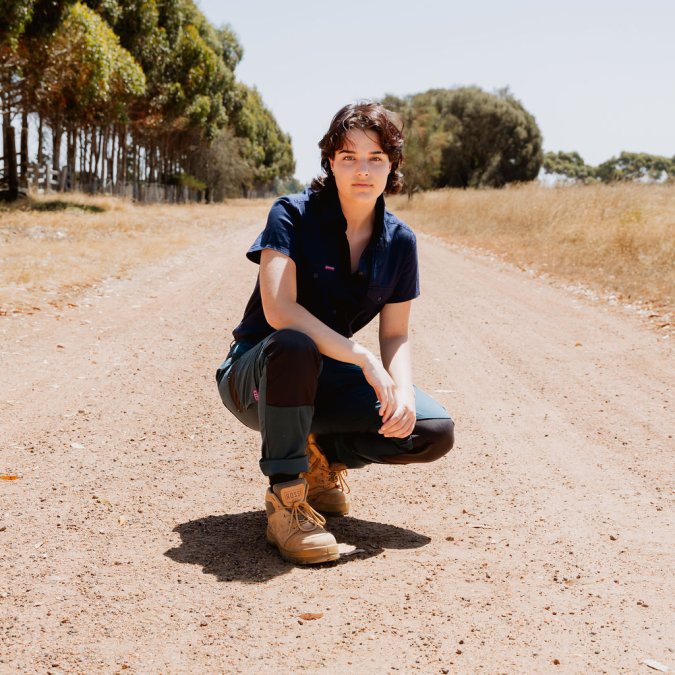
Durable workwear for female gardeners comes down to two things: fabric construction and how the garment is sewn at the points that take the most strain. Colour, cut and pockets won't save pants that split at the crotch by week six.
At Green Hip, years of watching what fails when working in the garden point to the same answer: rarely the fabric, almost always the seams.
Fabric weight, weave and stretch
Gardening pants worth buying sit around 290 gsm in a cotton-rich drill twill: heavy enough to resist rose thorns and fence wire, light enough that you're not overheating by 10am. Look for a blend close to 98% cotton and 2% spandex, Green Hip’s fabric was innovative and the first in the workwear industry to utilise a stretch fabric for easy movement. The majority cotton gives breathability and abrasion resistance; the stretch lets you squat, kneel and twist without the fabric fighting back.
Pure cotton is tough but restrictive; high synthetic content dries quickly but is sweaty in the heat.
Stitching and stress points that fail first
The crotch, belt loops and pocket corners fail first. A twin-needle seam through the crotch is the best indicator of a garment built to last, and reinforced bar tacks at stress points matter because that's where secateurs and trowels rip through cheap stitching.
Fit and Body Inclusivity: Why Women's Cuts Beat Sizing Down
Sizing down men's workwear is the most common workaround, and the reason so many women give up on gardening clothes that fit. Men's patterns assume a straighter hip-to-waist ratio, a longer rise and wider shoulders; shrinking the numbers doesn't change the shape.
Purpose-built women's cuts adjust the rise, hip curve and waist-to-hip ratio independently, so pants sit where they should when you bend rather than sliding down at the back. Green Hip’s tailored fit for a woman’s body shape is instantly recognised when the work clothes are on your body.
Adjustable waists and maternity-friendly options
A generous elastic waistband or adjustable waist buttons solve two problems at once: weight fluctuation and pregnancy. Green Hip's Overalls and Shortalls use waist buttons that loosen through pre, during and post-maternity without a second wardrobe, and the action-back bib allows easy bending when you're weeding at eight months.
For pants, the Mid Rise Give Cargo offers a back-elasticated waistband that moves with you.
Garment |
Best For |
Key Fit Feature |
Price |
|---|---|---|---|
All-day gardening, most body shapes |
High rise, narrow leg, twin-needle crotch |
$92.95 |
|
Mid Rise Pants Give Cargo |
Varied body types, warm weather |
Elasticated waistband, straight leg |
$102.95 |
Overalls 'All Women' |
Maternity and beyond |
Adjustable waist buttons, action-back bib |
$169.95 |
Shortalls 'All Women' |
Hot weather, maternity |
Adjustable waist, mid-thigh cuff |
$159.95 |
Breathability, Moisture-Wicking and Hot-Weather Comfort
Breathability is the combined effect of fibre type, yarn twist, weave openness and garment cut. Knowing which is doing the work tells you what to look for on a label rather than trusting a marketing badge.

Cotton moves moisture by absorption, which is why cotton drill feels cool in dry heat but heavy and clingy once saturated. Synthetics move moisture by capillary action, pushing liquid to the outer face where it evaporates, faster, but they hold odour and pill against abrasive surfaces like brick edging and gravel paths.
A cotton-rich blend with a small elastane content sits between the two: cotton handles absorption and abrasion, while elastane lets the weave open slightly as you move, improving air exchange at the knee, hip and underarm.
What actually drives airflow in a garment
Three construction details matter more than the fibre blend:
- Weave openness. A plain-weave drill at 290 gsm breathes less than a twill at the same weight because the interlacing pattern is tighter. Twill's diagonal structure leaves marginally more space between yarns.
- Garment cut. A loose fit at the waist and thigh creates a chimney effect: warm air rises out of the waistband as you move, drawing cooler air in at the hem. A tight fit eliminates that entirely, no matter how breathable the fabric is.
- Finish. A peach finish (a light mechanical brushing) softens the hand-feel and slightly raises the fibres, which can improve wicking at the surface. A heavy water-repellent coating does the opposite: it blocks vapour escape, so you stay dry outside and damp inside.
Coverage versus airflow in hot weather
Long sleeves protect against sun and scratches, but only if the fabric is light enough to let heat out. A 150 gsm cotton-spandex shirt gives sleeve coverage without the greenhouse effect of a 290 gsm drill, though it won't survive rose thorns or wire fencing the way a heavier drill will.
For the hottest days, shorts make more sense than pants. The High Rise Shorts 'Outdoor All-Rounder' and Mid Rise Shorts Give Cargo use the same 290 gsm cotton-stretch fabric as the pants, so you're not trading durability for coolness, and the mid-thigh cuff keeps fabric off the back of the knee where heat builds fastest.

Managing heat through the working day
Fabric choice is only half the problem. How you work in the heat matters just as much:
- Start early. Most gardeners find the window before mid-morning does more for comfort than any fabric change.
- Rotate tasks. Alternate between high-exertion work (digging, hauling) and low-exertion work (pruning, deadheading) so your core temperature has time to drop.
- Hydrate on a schedule, not on thirst. Thirst lags behind dehydration, especially in dry heat (Dehydration - signs, symptoms and treatment).
- Use shade as a tool. Move potted work and seed sowing to a shaded bench during the hottest part of the day rather than pushing through in full sun.
Gardeners often blame their clothing for overheating when the real issue is working continuously through the peak of the day. The right garment helps, but it cannot compensate for how the session is structured.
Women's Gardening Pants With Pockets That Carry Real Tools
A pocket that can't hold secateurs without sagging is decoration. The pockets that matter in women's gardening pants with pockets are the deep cargo pocket for a phone or hand tools, and the zippered pocket for keys and personal items. Green Hip’s Pants SKNY Flex is the creme de le creme of Gardening trousers with pockets for secateurs, gloves & tools.
Green Hip's Overalls and Shortalls include a deep zipper pocket plus a deep cargo pocket sized for a smartphone or small tools. The Give Cargo pants use the same logic, positioned so weight sits against your thigh rather than pulling the waistband down.
What most guides miss is pocket placement. A pocket set too far forward catches on fence wire and gate latches; set too low it drags when you kneel. The right position is mid-thigh, slightly to the side and easy to reach.
Sun-Protective Gardening Apparel: UPF 50+ and Coverage That Works
Sun-protective gardening apparel earns its rating through fabric construction, not a spray-on coating that washes out. UPF 50+ is the highest rating under the AS/NZS 4399 standard, meaning the fabric blocks the vast majority of UV radiation that reaches it.
Every Green Hip garment in the range is rated UPF 50+ and tested to AS/NZS 4399. That includes the pants, shorts, shirts, Overalls and Shortalls.
Coverage design matters as much as the rating. The Light Weight Shirt Extended Long Sleeve has extra back length to reduce sun exposure when you bend, plus a 3/4 sleeve option via adjustable cuff tabs. Pair it with the Broad Rim Hat, with its wire rim and built-in sweatband, or the Tradie Cap with ponytail hole and ventilation eyelets.
Layering Systems and Seasonal Gardening Requirements
Layering is the most underused tactic in gardening workwear and the one that stretches a single wardrobe across all four seasons. The version that works maps garment combinations to temperature bands, task types and how your body heats up and cools down across a session.
The principle is simple: a base layer manages moisture against your skin, a mid layer traps warmth, an outer layer blocks wind, sun or light rain. The real skill is adding and removing them as your exertion changes, because a gardener digging produces far more heat than one deadheading.
The three-layer system, mapped to conditions
Conditions |
Base |
Mid |
Outer |
Notes |
|---|---|---|---|---|
Hot, dry, full sun |
Short-sleeve shirt |
, |
, |
Sleeve coverage still matters for sun and scratches |
Warm, humid, overcast |
Short-sleeve shirt |
Long-sleeve shirt (worn open) |
, |
Open front increases airflow without losing arm coverage |
Mild, variable |
Singlet or short-sleeve shirt |
Long-sleeve shirt |
, |
Use sleeve tabs to roll to 3/4 as the day warms |
Cool, windy |
Long-sleeve shirt |
Vest or light jacket |
, |
Wind is the biggest comfort variable at this band |
Cold, wet |
Long-sleeve shirt |
Vest or jacket |
Water-resistant outer |
Keep the outer layer loose so it does not compress the mid layer |
Why consistency across the range matters
Shorts and pants swap seasonally using the same fabric weight, so fit and pocket layout stay consistent. Buying from a single range means you're not relearning how a garment moves every time the weather changes: a pocket that sits mid-thigh in summer shorts sits mid-thigh in winter pants, so muscle memory for reaching for secateurs or a trowel carries over.
The same logic applies to shirts: if short-sleeve and long-sleeve share a cut, the long-sleeve layers cleanly over the short-sleeve without bunching at the shoulder or riding up at the hem. Mismatched cuts are the most common reason layering feels uncomfortable, and it has nothing to do with the fabric.
Seasonal task mapping
Different seasons bring different tasks, and the layering system should follow the work, not just the thermometer.
- Summer: watering, deadheading, light pruning, harvesting. Minimal layers, maximum airflow, sun coverage on arms and neck.
- Autumn: planting, soil preparation, leaf clearing, bulb planting. Mild layers, with a mid layer that comes off as you dig.
- Winter: pruning dormant trees, structural work, bed preparation, tool maintenance. Full three-layer system, with an outer that blocks wind and light rain.
- Spring: seed sowing, transplanting, weeding, staking. The most variable season, which is why the roll-to-3/4 sleeve and a removable mid layer earn their place.
The mistake most gardeners make
A common pattern is dressing for the temperature at the start of the session and never adjusting. Body temperature climbs within the first twenty minutes of moderate work, then plateaus (pubmed.ncbi.nlm.nih.gov). Start slightly cool, add a layer when you pause, and remove it before you resume, that rhythm does more for comfort than any single garment choice.
Gardening Clothing Maintenance Tips: Repair, Wash and Make It Last
Gardening clothing maintenance tips rarely get covered, and it's the fastest way to double the life of what you own. Cotton-stretch drill is pre-shrunk and machine washable, but a few habits keep it in shape far longer.
- Wash in cold water and turn garments inside out to protect the peach finish
- Skip the dryer; line dry in shade to prolong the colour and strength of the fabric
- Store folded rather than hung, so shoulder seams don't stretch out
A common mistake is washing workwear with garden chemicals still on the fabric. Rinse mud and residue off before the wash cycle, or the abrasives work into the weave and wear it thin.
Choosing Durable Workwear for Female Gardeners: What to Ignore
Ignore the marketing language and check four things: fabric weight around 290 gsm for pants, twin-needle crotch seams, UPF 50+ rated to AS/NZS 4399, and an adjustable waistband. Those checks separate durable workwear for female gardeners from workwear that only looks the part.
Pay attention to fit last, because a garment that fits beautifully but fails at the crotch in two months isn't a good buy at any price. Green Hip was founded by Liv Thwaites, a horticulturalist by trade, and the range is designed by women for women working in gardens, parks and farms. The brand has planted over 45,000 plants in their give back program and has now partnered with TreeProject.
Start with the High Rise Pants SKNY Flex if you want one pair that handles most garden work, or the Overalls 'All Women' if you need maternity flexibility and maximum coverage.

Cheap gardening workwear looks identical to durable workwear on the rack; the difference only shows up after a season of kneeling, pruning and hauling. Green Hip builds workwear specifically for women's bodies, with twin-needle crotch construction, UPF 50+ protection rated to AS/NZS 4399, adjustable waists that work through pregnancy, and soft cotton-stretch fabric that moves without restriction. Get started with Green Hip Workwear For Women and build a gardening wardrobe that lasts more than one season.
Frequently Asked Questions
What are the best work trousers for gardeners?
Look for a cotton-rich drill twill with a small amount of stretch, around 290 gsm, because it resists abrasion from kneeling, stakes and wheelbarrows while still letting you squat and bend. Check for reinforced stitching at the crotch and a hem you can lengthen if needed. Green Hip's Gardener Gal High Rise Pants use a 98% cotton, 2% spandex drill twill with twin-needle crotch stitching, and the Give Cargo pants add an elasticated waistband for extra flex.
How should gardening workwear fit for maximum comfort?
Fit should allow a full squat and a raised-arm reach without the waistband digging in or the shirt pulling out of your pants. High-rise cuts suit bending and kneeling because they stay put, while mid-rise styles with elastic at the back of the waistband move with you. If you are between sizes on overalls or shortalls, going down a size gives a more tailored fit. Extra back length on shirts stops them riding up when you reach overhead.
Are stretch fabrics suitable for heavy-duty gardening?
Yes, when the stretch is added to a tough base fabric rather than replacing it. A blend such as 98% cotton and 2% spandex keeps the abrasion resistance and breathability of cotton while adding the give you need for kneeling, lifting and pruning. Pure stretch synthetics can snag on rose thorns and wire, so check the fabric weight and look for reinforced stitching at high-stress points before buying.
How do I look after gardening clothing so it lasts longer?
Shake off soil and hose mud off before washing, then wash in cold water with a mild detergent and line dry in shade to protect the fabric and any sun-protective finish. Zip pockets closed and empty cargo pockets first. Repair small tears and loose buttons early rather than waiting, and keep a spare button on hand. Rotating two pairs of pants rather than wearing one pair every day roughly doubles the life of each.