

Last Updated: November 24, 2026
Quick Summary
Choose farm work pants by matching fabric, cut and features to your hardest daily task, not the label or price. A cotton-rich drill with a small amount of stretch, reinforced knees and seams, and a high rise that stays put when you kneel and lift is the practical middle ground for mixed farm work.
- Buying for the easiest task on your list rather than the hardest is the most common mistake.
- Cotton duck resists snags and scuffs, suiting fencing and machinery, but takes longer to break in.
- Abrasion resistance is the single biggest predictor of long-term wear, so check knees, thighs and seat first.
- A high rise keeps fabric in place during lifting and crouching; check the knee panel sits over the joint when kneeling.
- Natural fibres like cotton breathe better than synthetics, and UPF 50+ fabric adds sun protection without overheating.
Table of Contents
- Start With Your Daily Tasks, Not the Label
- Fabrics That Survive Farm Work: Cotton, Canvas, Duck and Blends
- Durable Work Pants for Farming: What to Check Before You Buy
- Fit, Sizing and Freedom of Movement for Women's Farm Work Pants
- Farm Work Pants With Pockets: Tool Storage That Actually Works
- Farm Pants for Hot Weather: Staying Cool Without Losing Protection
- Care, Safety and Total Cost of Ownership
- Find Your Pair and Get Back to Work
- Frequently Asked Questions
Start With Your Daily Tasks, Not the Label
The fastest way to end up with the wrong pair is to shop by brand or price instead of by what you actually do all day. Learning how to choose farm work pants starts with one question: what does your average day demand from the fabric on your legs?
A livestock handler kneeling in wet grass needs different reinforcement than someone driving a tractor for eight hours. Fencing work shreds inner thighs on wire. Fieldwork grinds knees through soil and stubble. A pant that suits one job can fail badly at another.
Matching Pants to Livestock, Fencing, Machinery and Fieldwork
Think of your week as a list of tasks, then match the pant to the hardest one. The table below sets out what each task actually stresses, so you can weigh features against the work you do most.
| Task | What it stresses | Feature to prioritise | Trade-off to accept |
|---|---|---|---|
| Livestock handling | Waistband, seat and inner thigh from crouching, lifting and quick movement | Stretch cotton drill with a snug, high waistband and gusseted crotch | More stretch means slightly less abrasion resistance than rigid canvas |
| Fencing | Inner thighs and lower legs from wire, posts and repeated kneeling | Heavyweight cotton duck or canvas with reinforced knees and twin-needle seams | Stiffer fabric takes longer to break in and feels warmer in heat |
| Machinery operation | Lower legs and hems from levers, hitches and moving parts | Straight or narrow leg with a clean hem and no loose cuffs | Fewer utility pockets than a cargo cut |
| Fieldwork and gardening | Knees, seat and thighs from constant kneeling, soil and stubble | Breathable cotton-rich drill with abrasion-resistant knees and UPF 50+ | Lighter fabric wears faster at the knees than duck |
If your week mixes all four, choose the middle ground: durable cotton drill with stretch, reinforced high-wear areas, and a leg cut that stays clear of moving parts. A cotton-rich drill with a small elastane content is a common compromise, because it can hold up to abrasion while still letting you squat and climb.
Watch out: buying for the easiest task on your list rather than the hardest is the most common mistake. A pant that handles fencing will handle paperwork; the reverse is rarely true.
Matching the Cut to the Movement
The cut matters as much as the fabric. A high rise keeps fabric in place when you lift and crouch, while a straight leg stays clear of levers and hitches. If you spend most of the day on your knees, check that the knee panel sits over the joint when you kneel, not above or below it. If you climb in and out of machinery, check that the hem does not catch on steps or pedals. These are the details that separate a pant that works from one that merely looks the part.
Fabrics That Survive Farm Work: Cotton, Canvas, Duck and Blends
Fabric choice decides how long a pair lasts, how it feels in heat, and how well it moves with you. The main options are heavyweight cotton, cotton duck, canvas, cotton blends and denim, and each trades something for something.
For most farm work, a cotton-rich drill with a small amount of stretch hits the sweet spot. Green Hip's High Rise Pants Original 'Gardener Gal' use a 290 gsm 98% cotton, 2% spandex drill twill, with enough flex for kneeling and climbing.
Why Abrasion Resistance and Reinforced Seams Matter
Abrasion resistance is how well a fabric holds up against rubbing, and it's the single biggest predictor of long-term wear. Knees, thighs and seat take the most punishment, so check those areas first.
Reinforced seams keep a good fabric from failing early. Twin-needle stitching at the crotch, for example, adds strength where strain concentrates.
Durable Work Pants for Farming: What to Check Before You Buy
Durable work pants for farming share a handful of checkable features. Run through this list before you commit, and you'll filter out the pairs that look tough but aren't.
| What to Check | Why It Matters | What Good Looks Like |
|---|---|---|
| Fabric weight | Heavier cloth resists abrasion | Around 290 gsm cotton drill |
| Stretch content | Freedom of movement without bagginess | Small elastane percentage |
| Seam construction | Prevents early splitting | Twin-needle at high-strain points |
| Reinforced areas | Protects knees and seat | Extra stitching or panels |
| Hem allowance | Lets you adjust length | A few centimetres to spare |
| Sun rating | Protects in outdoor conditions | UPF 50+ rated fabric |
Two features worth prioritising: a fabric weight heavy enough to resist wear, and a hem you can let down if you're tall or want extra length. The High Rise Pants Original 'Gardener Gal' carry a 290 gsm cotton stretch build, a 2.5cm to 3cm hem for extending length, and UPF 50+ protection rated to the AS/NZS 4399 standard. Selecting gear that balances these technical specifications with the specific demands of your property is a useful guide for building a resilient wardrobe for small hobby farms.
Fit, Sizing and Freedom of Movement for Women's Farm Work Pants
Fit is where most women's farm work pants fall short, and it's not a vanity issue. A waistband that gapes lets cold air and dirt in when you bend. A rise that sits wrong restricts squatting. An inseam that's too short rides up every time you kneel.
Start with rise. A high rise keeps fabric in place during lifting and crouching, while a mid rise suits women who prefer a lower waistband. Then check inseam and hem allowance, and finally stretch: enough to move freely, not so much that the pant loses shape.
A Fit Testing Checklist for Rise, Inseam and Stretch
Try this before you commit to a size:
- Squat fully: does the waistband stay put or gape at the back?
- Kneel on one knee: do the knees pull tight or bunch?
- Step up onto a surface: does the rise restrict your hip?
- Check the hem: can it be extended if you need extra length?
- Stretch test: does the fabric recover its shape after movement?
If you're unsure of your measurements, follow a complete sizing guide before ordering, and use these fit checks for ease of movement to confirm the cut works for your body and tasks.
Farm Work Pants With Pockets: Tool Storage That Actually Works
Farm work pants with pockets should hold what you reach for most, without bulk that catches on fences or machinery.
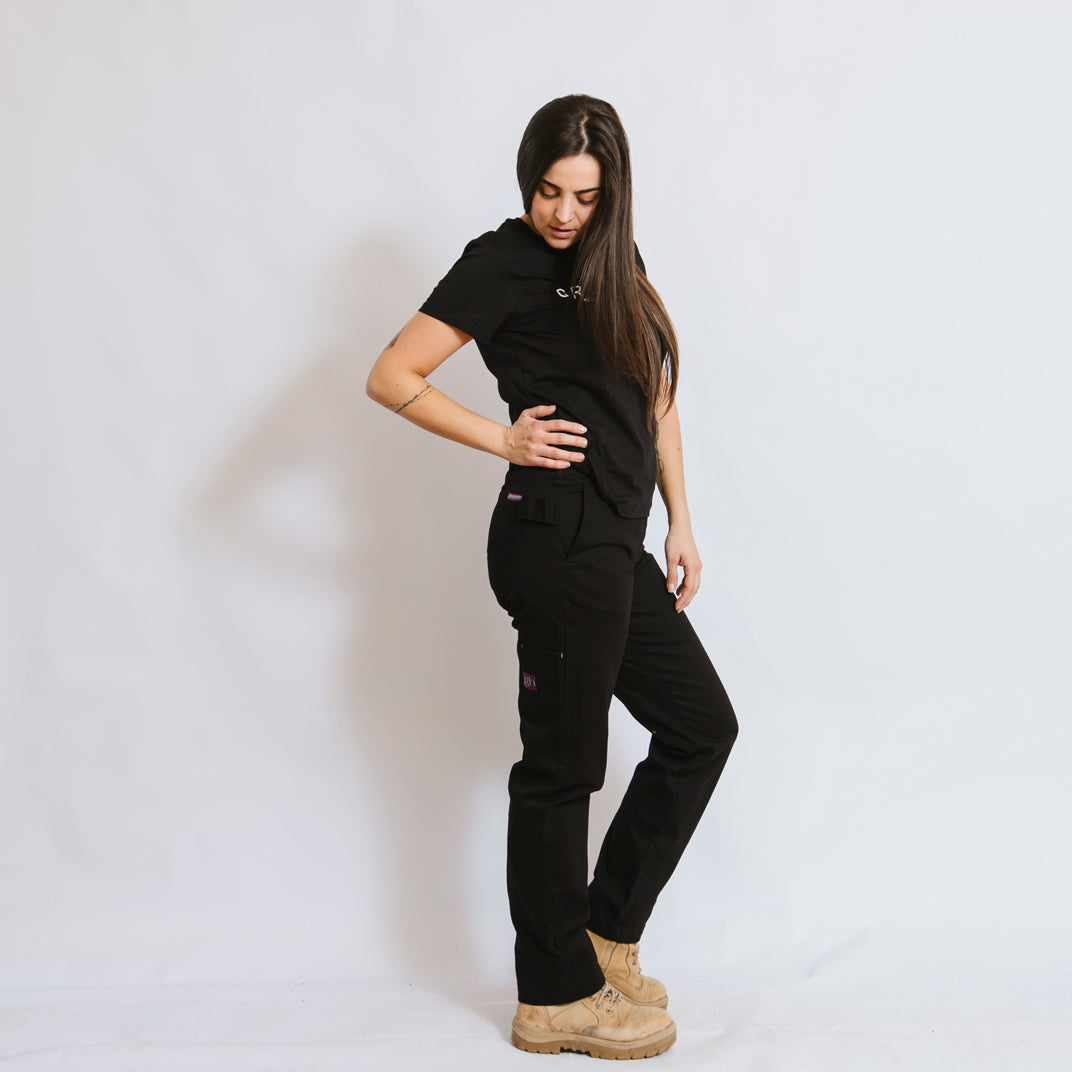
Look for deep front pockets, secure back pockets and utility pockets on the leg. A dedicated tool holder is a bonus if you carry hammers, cutters or a two-way radio. Just keep the load balanced: overloading one side pulls the waistband and ruins the fit you tested so carefully.
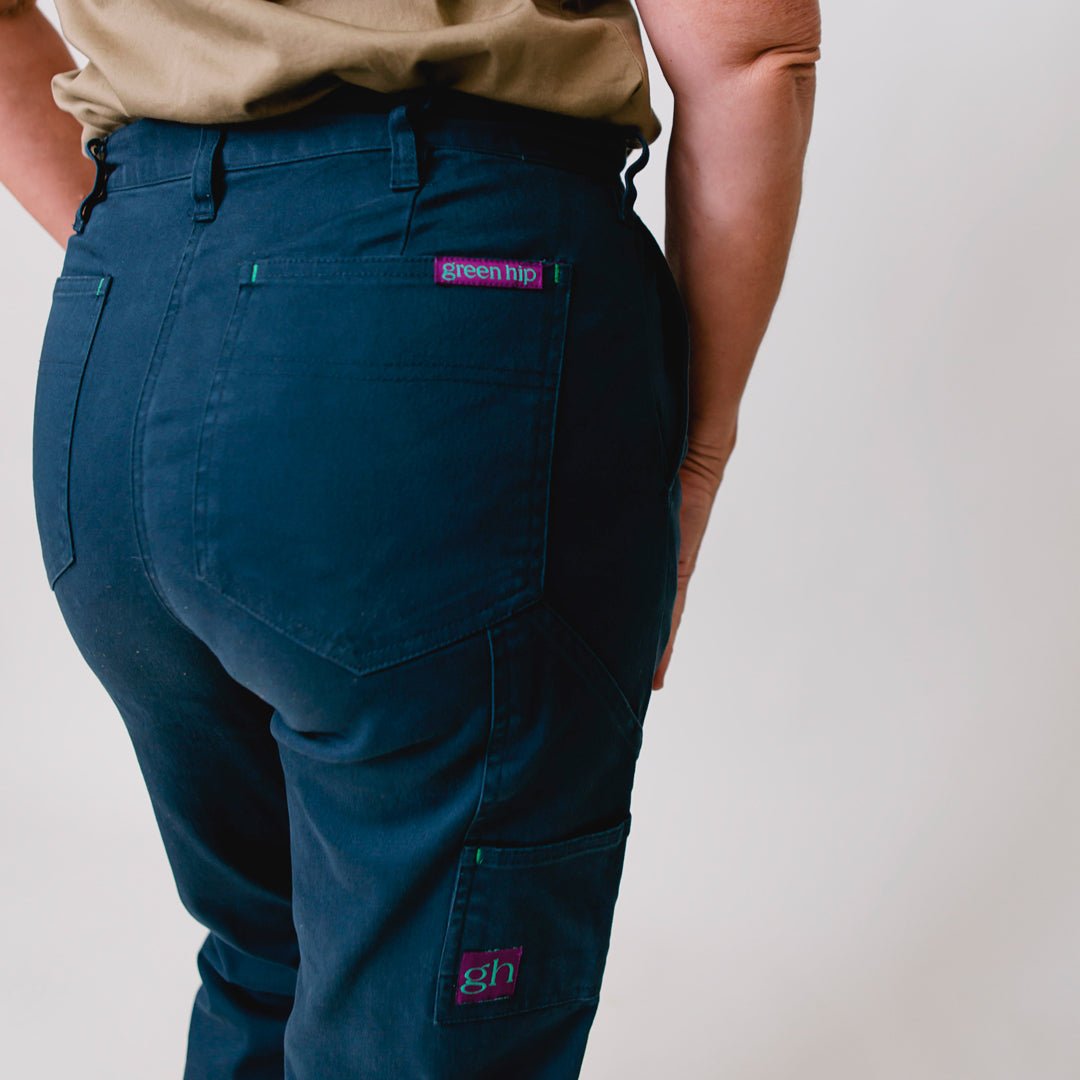
The Mid Rise Pants Give Cargo 'Every Bron, Vick and Sally' feature a straight leg cut and an elastic waistband.
Farm Pants for Hot Weather: Staying Cool Without Losing Protection
Farm pants for hot weather have to do two jobs at once: keep you cool and keep you covered. The answer isn't thinner fabric, it's the right fabric and the right construction. Natural fibres like cotton breathe far better than synthetic blends, and a cotton-rich drill lets heat escape while still blocking sun and scratches.
Breathability is about how easily moisture vapour passes through the cloth. A tightly woven duck traps heat because air can't move through it, while a lighter cotton drill with a small amount of stretch lets air circulate without losing abrasion resistance.
Pair breathable pants with a UPF-rated fabric and you get protection without overheating. A UPF 50+ rating, tested to the AS/NZS 4399 standard, indicates a high level of sun protection.
Ventilation, Layering and the Heat Trade-off
Ventilation features make a real difference in heat. If you work in changing conditions, a base layer under a breathable pant lets you adjust without changing the whole outfit.
Thinner fabric feels cooler but wears faster at the knees and seat, and shorts leave your legs exposed to sun, stubble and insects. Long pants in a breathable cotton usually win over a full day outdoors, because the sun and scratch protection outweigh the extra warmth.
Care, Safety and Total Cost of Ownership
The cheapest pair is the one you don't have to replace, so care and safety belong in the buying decision. Wash cotton workwear with care and air-dry where you can.
On safety, match the pant to the hazard. Reflective tape helps if you work near vehicles or machinery in low light, and a UPF rating protects against sun. The Pants Cargo Reflective 'Be Seen' carry 3M loops above and below the knee.
For washing tips that keep fabric strong, read how to wash work clothes without ruining them.
Find Your Pair and Get Back to Work
Choosing well comes down to matching fabric, fit and features to your real tasks, then caring for the pair so it lasts. That's the whole method, and it beats guesswork every time.
At Green Hip, we design workwear by women, for women, so the fit and freedom of movement are built in from the start. Browse the women's work range built for demanding days and find the pair that fits your work.
The hardest part isn't finding work pants, it's finding ones cut for your body and your job. Green Hip makes that easier with women's-specific fit, soft cotton stretch fabric and durable construction tested to high quality standards. Get started with Green Hip Workwear For Women and work your next season in comfort, safety and style.
Frequently Asked Questions
What should I look for in farm work pants?
Prioritise fabric weight and abrasion resistance first, then fit and pocket layout. A heavyweight cotton drill or canvas in the 290 gsm range handles daily tasks without wearing through at the knees. Check for reinforced seams, twin-needle stitching at high-stress points and a rise that lets you squat, kneel and climb without restriction. Pockets should hold tools securely without bulk getting in the way.
Which fabric is best for farm work pants?
Heavyweight cotton, cotton duck, canvas and cotton-rich blends offer the best balance of durability and breathability for farm work. Pure denim works well for general fieldwork but can be stiff when new. A cotton-spandex blend, such as 98% cotton with 2% spandex, adds stretch for kneeling and climbing while keeping the abrasion resistance of cotton. Avoid lightweight synthetics that snag on fencing or tear on machinery.
How should farm work pants fit?
They should feel snug at the waist without digging in, with enough room through the hips and thighs to squat and kneel comfortably. Check the rise: a high-rise keeps fabric in place when bending, while a mid-rise suits shorter torsos. The inseam should clear the ground when standing and not ride up when crouching. Many work pants include a 2.5cm to 3cm hem allowance so you can extend the length if needed.
How do I choose farm pants for hot weather?
Look for breathable natural fibres like cotton, a lighter fabric weight where abrasion risk is lower, and a cut that allows airflow without being loose enough to catch on equipment. Pre-shrunk cotton and peach-finished fabrics feel cooler against the skin. Long pants still offer better protection from scratches, sun and insects than shorts, so choose breathable cotton over switching to shorts in most field conditions.
