

Last Updated: November 17, 2026
Quick Summary
Ease of movement in outdoor workwear comes from pairing a stretch fabric, such as cotton-stretch twill, with construction that flexes where you bend. Run the five-minute mobility test before you buy: squat, kneel, reach overhead and step up, then try a different rise or size if anything pulls or binds.
- Green Hip's signature 290 gsm cotton-stretch twill is built to flex without losing shape.
- Look for a crotch sewn with twin needles for strength where range of motion is won.
- Test the full layer stack together, not each layer alone, before you commit.
- Size each layer to its own job: base close, mid thin, shell roomy over the stack.
- A high-rise cut sits above the hips, while a mid-rise cut feels more relaxed.
Table of Contents
- Why Ease of Movement Decides Whether Outdoor Workwear Works
- How to Choose Outdoor Workwear That Moves With You
- The Five-Minute Mobility Test to Run Before You Buy
- Workwear Fit and Mobility: Getting the Rise, Waist and Length Right
- Stretch Workwear for Women: What the Fabric Actually Does
- Comfortable Gardening Clothes for Women Who Bend, Kneel and Reach All Day
- Layer Up Without Locking Up Your Movement
- Find Your Fit in the Green Hip Range
- Frequently Asked Questions
Why Ease of Movement Decides Whether Outdoor Workwear Works
Ease of movement is the single quality that separates workwear you forget you're wearing from gear that fights you all day. At Green Hip, we build every garment around that idea: clothing should follow the body, not hold it back. If you spend your days bending, kneeling, reaching and lifting, restriction costs you time, energy and comfort.
Real work happens in a squat, a lunge, a stretch across a garden bed. A garment can look durable on the rack and still pull tight across the hips the moment you crouch. Fit and fabric decide whether that happens, and both are things you can check before you spend a cent.
Below, we'll show you seven practical checks, including a five-minute mobility test you can run in a fitting room, so you can judge ease of movement without restriction for outdoor clothing for yourself.
How to Choose Outdoor Workwear That Moves With You
Choosing outdoor workwear that moves with you comes down to two things: fabric and construction. Get the fabric right and the garment flexes with your body. Get the construction right and it stays comfortable through every bend. Ignore either and you'll feel the drag by mid-morning.
Start With the Fabric, Not the Label
Fabric is where movement begins. A cotton drill with a small amount of stretch gives you flex without losing shape. Green Hip's signature 290 gsm cotton-stretch twill is built on exactly that balance, and it suits gardening and outdoor roles.
For a closer look at how fabric choice affects longevity, our guide to durable workwear for female gardeners covers what holds up season after season. Watch out: a fabric that feels soft on the shelf can still be cut too close through the seat and thighs, so always pair the fabric check with a fit check.
Check the Construction Where It Counts
Construction is where range of motion is won or lost. Look for a crotch sewn with twin needles for strength. Our High Rise Shorts Original and Mid Rise Shorts Give Cargo use this construction.
Pockets matter too, and our High Rise Pants SKNY Flex feature multiple utility pockets. If pockets are high on your list, our breakdown of women's workwear with deep pockets shows what to look for. A common mistake is buying on waist size alone and ignoring how the seat and thigh are cut. That's the difference between pants that move and pants that pinch.
The Five-Minute Mobility Test to Run Before You Buy
Run this five-minute mobility test before you buy: wear the garment, then squat, kneel, reach overhead and step up. If the fabric pulls, the waist digs or the knees bind, it may not suit you.
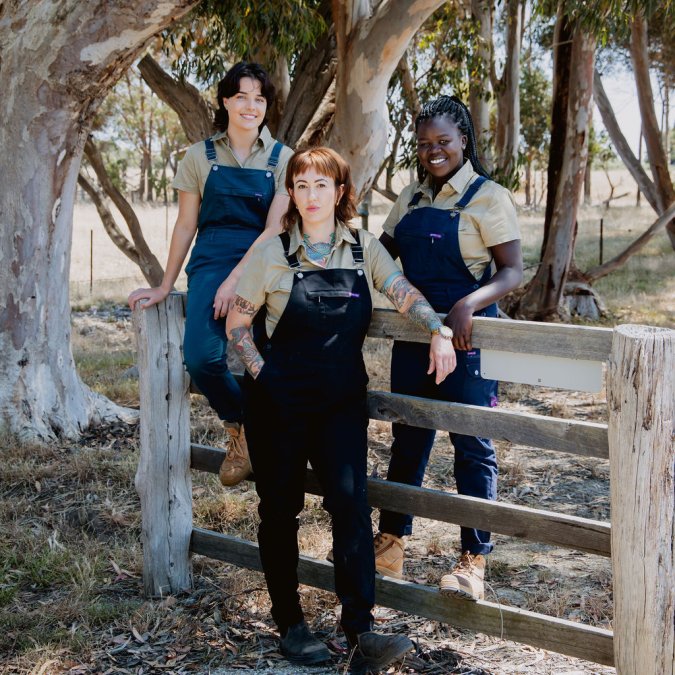
Work through these checks in order:
- Deep squat - lower until your thighs are near parallel. Feel for tightness across the seat and knees.
- Kneel on one knee - check whether the fabric stretches or the seam bites at the back of the leg.
- Reach overhead - raise both arms. The waistband should stay put, not ride up.
- Step up - use a step or box. Watch for the hem catching or the knee pulling.
- Twist and bend forward - reach for your toes. Note any pressure points at the waist or hips.
If any step restricts you, try a different rise or size. This test tells you more in five minutes than any size chart will.
Workwear Fit and Mobility: Getting the Rise, Waist and Length Right
Workwear fit and mobility start with rise, waist and length. The right rise keeps the waistband in place as you bend. The right waist gives you room without gaping. The right length stops fabric bunching at the knee.
Rise changes everything for movement. A high-rise cut sits above the hips, which suits many outdoor roles. A mid-rise cut gives a more relaxed feel around the middle. Our high-rise stretch work pants feature a high rise with back elastic waistband, while our mid-rise cargo work pants have a straight leg cut.
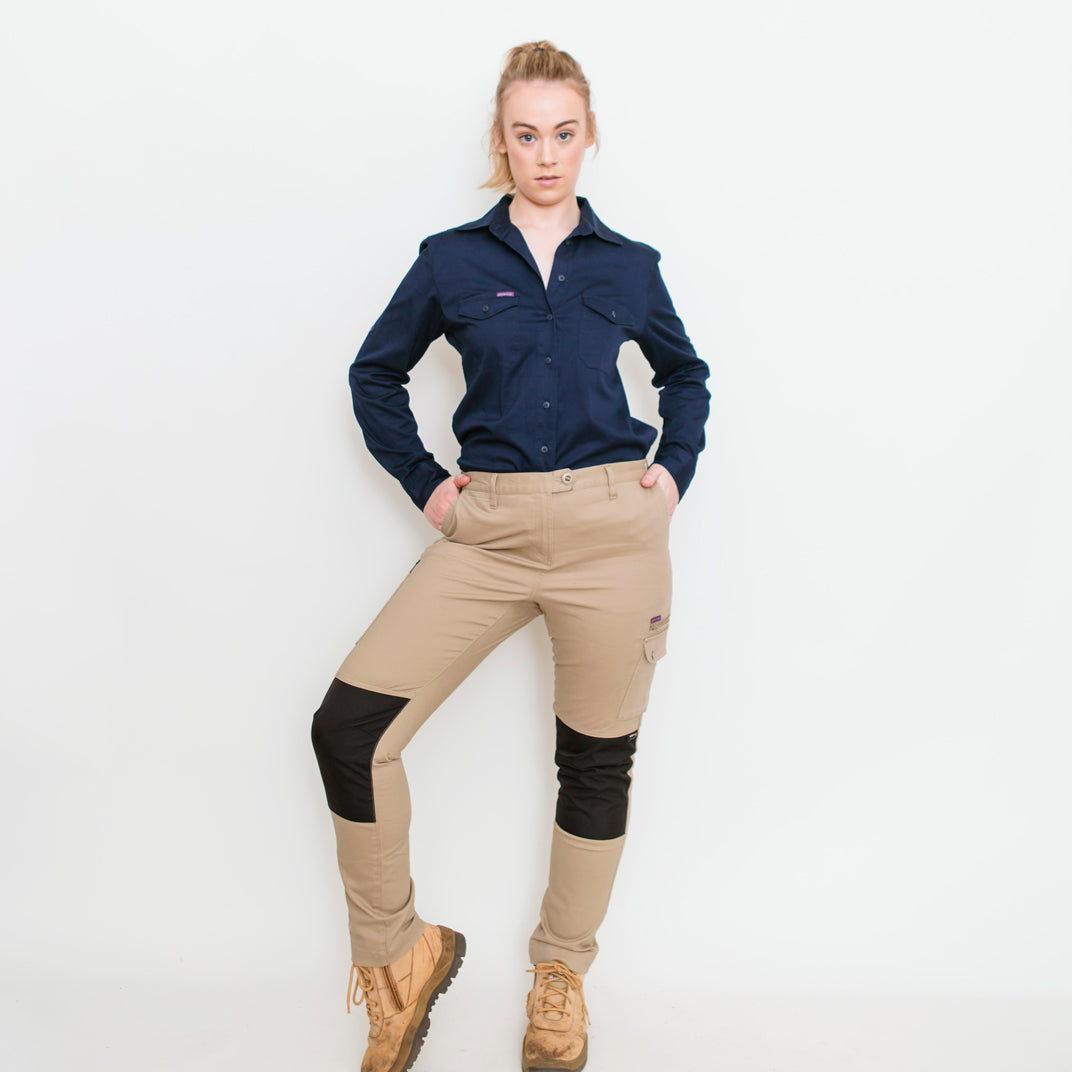
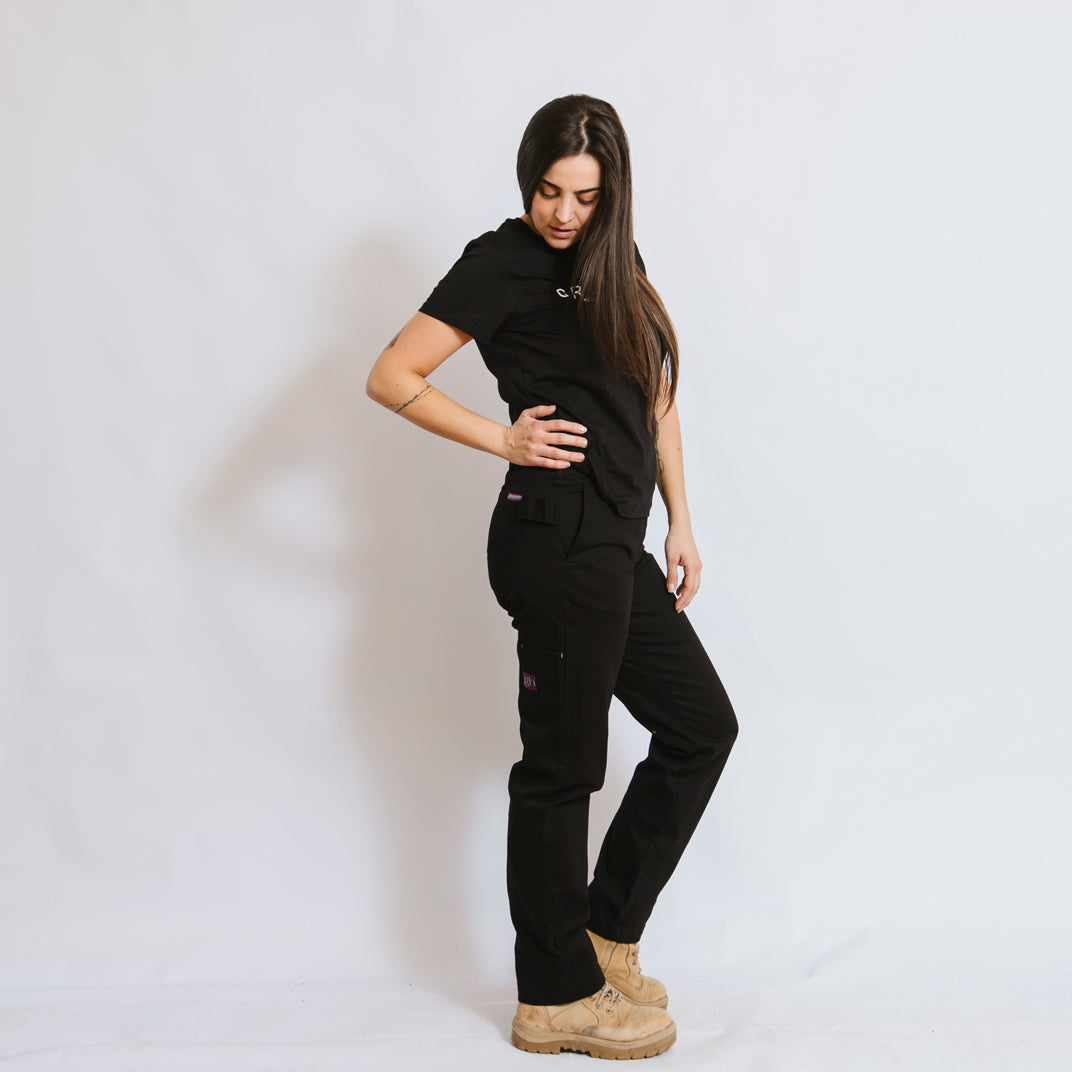
Check the length in your work posture, not standing straight. A straight-leg cut with a little extra hem length lets you adjust the fit to your body. Watch out: a waistband that feels snug standing can dig in badly when you sit or squat, so test it in motion.
Stretch Workwear for Women: What the Fabric Actually Does
Stretch workwear for women works because the fabric recovers, not just because it stretches. A cotton-spandex blend flexes as you move and springs back into shape, so the garment keeps its fit instead of sagging at the knees and seat.
The trade-offs are worth knowing:
| Fabric approach | Strength | Limitation |
|---|---|---|
| Cotton-stretch twill | Breathable, durable, recovers well | Less weather resistance than synthetics |
| Stiff cotton drill | Very hard-wearing | Restricts movement until broken in |
| Synthetic soft-shell | Weather resistant, flexible | Can feel less breathable in heat |
For many outdoor roles, a cotton-stretch twill offers a practical balance of movement and breathability.
Comfortable Gardening Clothes for Women Who Bend, Kneel and Reach All Day
Comfortable gardening clothes for women need to survive a full day of bending, kneeling and reaching. That means flexible fabric, a secure waist and knees that don't bind. Gardening is a low, grounded kind of work, and your clothing has to follow you down to the soil and back up again.
Knee movement is the big one. A pant that allows a deep kneel without pulling at the back of the leg keeps you working longer. Our SKNY Flex pants include an un-stitch me! knee pad function; knee pads are purchased separately and cut to size. If you're new to the garden, our beginner gardening tips pair well with choosing clothing that lets you move freely while you learn.
Breathability matters in warm weather, and our shorts are engineered for breathability in hot environments.
Layer Up Without Locking Up Your Movement
Layering up without locking up your movement means adding warmth in thin, flexible layers instead of one bulky garment, and then sizing each layer so the stack still bends with you. A close-fitting base layer, a flexible mid layer and a weather-resistant outer layer let you adjust to the conditions without losing your range of motion.
Base layer: close, not tight. The base layer sits against the skin and manages moisture. It should follow the body without compressing the shoulders or the seat. A merino wool or cotton-blend base in your normal size is usually right; sizing down to 'feel supported' is what restricts the reach overhead. Check by raising both arms, if the hem lifts clear of your waistband, the base is too short or too small.
Mid layer: thin and stretchy. The mid layer is where most people over-buy. A fleece or lightweight insulated layer adds warmth, but a bulky one stacks fabric at the elbow and shoulder and turns a free reach into a shove.
Outer layer: room to move over the stack. The shell is the one layer that should be genuinely roomy, because it has to fit over everything beneath it. Size the shell over your thickest mid layer, not over a T-shirt. A shell that fits over a base layer alone will bind at the shoulder the first cold morning you add a fleece.
The sizing rule that prevents bulk. Do not size up on every layer. Size each layer to its own job: base close, mid thin, shell roomy over the stack. If you find yourself sizing up on the base and the mid to fit the shell, the shell is the wrong size, not the layers beneath it.
Adjustment beats bulk. Cuffs, hem drawcords, pit zips and a hood that cinches let you vent heat without removing a layer, which keeps your range of motion intact while you regulate temperature. A shell with pit zips is worth more on a hard climb than a thicker mid layer you have to stop and take off.
The trade-off to accept. Every layer you add costs a little mobility at the shoulder and elbow. The goal is not zero restriction, it is restriction you can live with while you work. Test the full stack, not each layer alone: put on base, mid and shell together, then squat, reach overhead and step up. If the stack passes, you have layered without locking up.
Add or remove layers as the day warms, and your freedom of movement stays intact. Watch out: a shell that feels fine over a base layer in the fitting room can bind badly once you add a mid layer outdoors, so always test the full stack before you commit.
Find Your Fit in the Green Hip Range
Finding your fit comes down to matching rise, fabric and construction to the way you actually work. Once you've run the mobility test and checked the details that matter, the right garment is the one you stop noticing.
Green Hip was founded by Liv Thwaites, a horticulturalist by trade, and our garments are designed by women, for women. Our cotton-stretch fabric and elastic waistbands are designed for ease of movement, with a 4.79 average rating from 1,149 reviews, and one tree planted for every garment purchased.
Ready to move freely through every task? Get started with Green Hip Workwear For Women and find workwear built for the way you bend, kneel and reach. Explore our high-rise and mid-rise pants, shorts and overalls, all designed to fit real bodies in real working conditions.
Frequently Asked Questions
How can you tell if outdoor clothing allows a full range of movement?
Try it on and move through the positions your job demands: squat, kneel, reach overhead, twist and step up. Watch for fabric pulling across the back, hips or knees, a waistband that digs in when you bend, and sleeves that ride up. A garment with good ease of movement stays in place and lets you reach your full stride without hitching or adjusting. If you feel resistance at the shoulder or crotch, size up or choose a cut with more room.
What fabrics are best for comfortable outdoor workwear?
Cotton-rich stretch fabrics work well for many outdoor roles because they are breathable. A small amount of spandex, around 2%, adds the stretch needed for bending and kneeling without losing durability. Heavier knits and soft-shell fabrics suit cooler conditions, while lightweight breathable fabrics help in heat. Look for a fabric weight around 290 gsm for a balance of toughness and comfort, and check for a UPF rating if you work in full sun.
How should outdoor workwear fit when you bend, reach and kneel?
It should feel close but not tight at the waist, with enough room at the hip and thigh to squat without the fabric straining. The rise matters: a high-rise waistband stays put when you bend, while a low rise can gap at the back. Check that knee panels or reinforced knees sit over your actual knee joint, not above or below it. Sleeves should let you reach overhead without pulling the hem out of your waistband.
What features make women's workwear more comfortable for gardening?
An elastic or part-elastic waistband moves with you as you bend, and a high rise keeps coverage when you kneel. Utility pockets keep secateurs and twine within reach without a tool belt. A gusseted or twin-needle crotch adds strength and room where fabric usually fails. Look for a fabric that breathes in heat. Green Hip's High Rise Pants SKNY Flex feature utility pockets and an elastic waistband, and High Rise Shorts Original are engineered for breathability.
