

Last Updated: October 25, 2026
Quick Summary
A good workwear fit starts with four measurements: waist, hip, inseam and rise, taken over light clothing with a soft tape. Compare those numbers to the garment's size chart, then test the four movement actions, squat, kneel, reach overhead and step up, before you commit.
- Measure your waist at the narrowest point above your navel, and your hip at the fullest part.
- If you can slide two fingers under the waistband, the fit is about right.
- A high-rise pant sits at or above the navel and stays put when you bend.
- Sizing down will not fix a rise problem; it will just make the seat tight.
- Buy for your largest measurement and alter the rest, since a waist take-in is straightforward.
Table of Contents
- Start With How to Measure for Women's Workwear
- Women's Work Pants Fit: Waist, Rise and Inseam Checks
- Workwear Fit and Movement: Test These Four Actions Before You Commit
- Workwear for Different Body Shapes: Shoulders, Hips and Height
- Fabric and Construction: What Stretch and Seams Tell You About Fit
- Match the Fit to the Job: From Gardens to Construction Sites
- Shop Women's Workwear With Confidence: Returns, Alterations and Sizing Help
- Frequently Asked Questions
Start With How to Measure for Women's Workwear
Good workwear fit starts with three numbers: your waist, your hip, and your inseam. Measure over light clothing with a soft tape, keep the tape snug but not tight, and write the numbers down before you shop. At Green Hip, we build pants around those measurements rather than around a men's size chart with the labels changed.
Here is how to measure for women's workwear:
- Waist: Measure at your natural waist, the narrowest point above your navel.
- Hip: Measure around the fullest part of your hips and seat.
- Inseam: Measure from crotch to the point where you want the hem to sit, using a pair of pants that already fit you well.
- Rise: Measure from your crotch seam up to your waistband, front and back.
A common mistake is measuring over thick jeans or a bulky belt. That adds centimetres you will not have on the day.
Women's Work Pants Fit: Waist, Rise and Inseam Checks
The waistband should sit flat with no gaping at the back and no digging when you sit down.
Rise changes everything. A high-rise pant sits at or above the navel and stays put when you bend.
Inseam is the check most people skip. Too long and you walk on the fabric; too short and you get cold ankles in winter.
If you want to see how waist, rise and inseam work together in practice, the High Rise Pants SKNY Flex 'Every Woman Utility' shows the combination on a real garment.

Workwear Fit and Movement: Test These Four Actions Before You Commit
Fit that looks right standing still can fail the moment you move. Test these four actions before you commit to any pair:
- Squat down fully. The fabric should stretch at the knee and hip, not pull at the crotch seam.
- Kneel on one knee. Check the knee area for tightness and whether the waistband drops.
- Reach overhead. Your shirt should stay tucked if you want it tucked, and the shoulders should not ride up.
- Step up onto a surface. Watch for the hem catching and the waist gaping at the back.
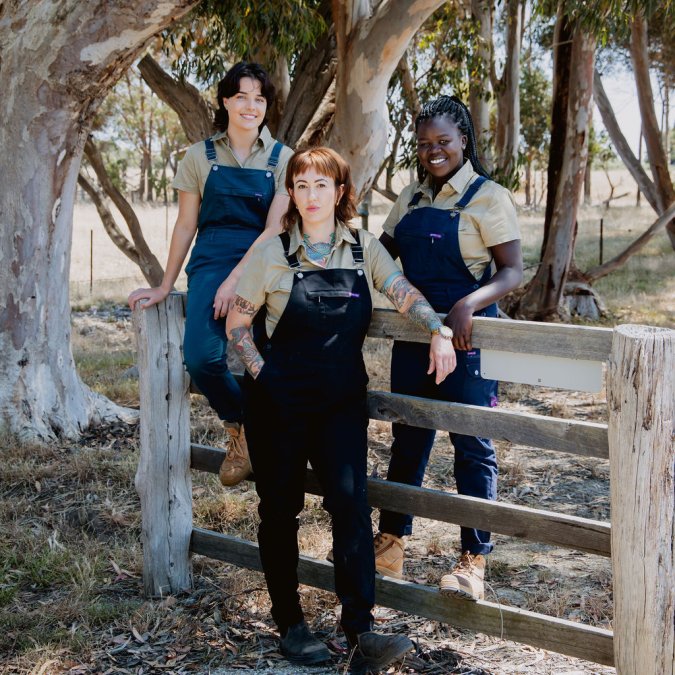
If a pant passes all four, it will handle a full shift. If it fails one, it will fail it every day. The Mid Rise Pants Give Cargo 'Every Bron, Vick and Sally' is a good one to picture during these tests, with a straight leg cut and an elastic waistband that moves with you.

Workwear for Different Body Shapes: Shoulders, Hips and Height
Most fit advice stops at "find your shape and dress for it", which is not useful on a worksite. What helps is knowing which measurements to check, which adjustments to ask for, and which cuts to avoid across petite, tall, plus-size and mixed-proportion bodies.
Shoulders first, because they are the hardest to alter
Shoulder seams should land at the edge of your shoulder bone, not past it; a seam that hangs low drags the garment down and restricts your arms.
If your shoulders are broad relative to your hips, a drop-shoulder or raglan sleeve gives you room without pulling across the back; set-in sleeves on a broad frame tend to strain at the armhole.
Hips and seat: fit the widest point, then adjust
Hip fit matters more than waist size on paper. If your hips are fuller, choose a cut with room through the seat and take in the waist; if they are narrow, a straighter leg stops the fabric ballooning.
A practical check: sit down in the garment. If the waistband gaps at the back by more than about two fingers, the rise is wrong for your proportions, not the size.
Petite: shorten the rise, not just the hem
Petite women do better with a shorter rise and a hem that does not need three folds. Hemming alone leaves the knee break in the wrong place, making the leg look and feel long even after shortening.
Look for:
- A rise measurement (crotch seam to waistband) that suits your torso length, many petite shoppers find a mid rise sits like a high rise.
- A hem you can shorten without losing the shape of the leg, a straight or narrow leg is easier to alter than a wide flare.
- Pockets and knee panels that sit at the right height; on a long rise, knee reinforcement lands on the shin.
Tall: add length and rise together
Taller women often need extra length and a higher rise. Adding length to the hem without adding rise pulls the waistband down when you bend.
Sleeve length is the other tall check: with arms at your side, the cuff should sit at the wrist bone, not above it. If sleeves are short, a cuff you can roll cleanly is better than one that stops mid-forearm.
Plus size: check the grade, not just the size
Sizes are graded differently between labels, a size 18 in one brand can match a size 16 or 20 in another. Rather than trusting the number, compare the garment's waist, hip and inseam measurements against your own.
Two construction details matter more as sizes increase:
High Rise Pants SKNY Flex ‘Every Woman Utility’ →
- Waistband shape. A contoured waistband follows the curve of the lower back and reduces gaping; a straight band tends to stand away.
- Seat and thigh room. Check that the rise and the seat depth are both graded up, not just the waist. A pant that only grows at the waist will pull across the seat when you squat.
Mixed proportions: fix the garment, not your body
Many women are, for example, a small top and a larger bottom, or the reverse. Buy for your largest measurement and alter the rest: a waist take-in is straightforward, letting out a seat is not. If you are between sizes, size up and adjust down.
An overall can solve fit across the whole body at once. The Overalls 'All Women' has adjustable straps and a waist button system, which helps when your shape shifts over time, and it lets you set the rise where you want it rather than accepting a fixed one.
Fabric and Construction: What Stretch and Seams Tell You About Fit
Fit is not only a size decision. Two garments in the same size can behave completely differently through a shift because of how the fabric stretches, how it is cut, and how the seams are built.
Stretch: how much, and in which direction
A small amount of stretch is what makes workwear comfortable. Look for a cotton-rich fabric with a little elastane, which holds shape while giving you room to bend; too much stretch sags by lunchtime, too little fights you all day.
What to check on the label and by hand:
- Stretch percentage. A small amount of elastane, commonly around 1-3% in cotton workwear, gives recovery without bagging. Higher stretch fabrics feel comfortable on the rack but tend to lose shape at the knee and seat over a long day.
- Two-way versus four-way stretch. Two-way stretches across the body; four-way stretches across and down. Four-way is more forgiving for squatting and kneeling, but check that it recovers, pull the knee area and see whether it springs back.
- Recovery test. Stretch the fabric across the knee, hold for a few seconds, release, and watch whether it returns flat. Slow recovery means sagging by mid-afternoon.
Fabric weight: match it to the work
Fabric weight tells you about durability. A mid-weight drill twill balances breathability with toughness, which suits most outdoor work.
A practical rule: if you will be kneeling or brushing against rough surfaces, go heavier at the knee and seat. If you will be moving constantly in warm conditions, go lighter and rely on cut and stretch for freedom of movement.
Seams: where garments fail first
Check the seams where it counts. Twin-needle stitching at the crotch adds strength at the highest stress point. Flat seams sit better under a tool belt. Bar tacks at pocket corners stop them tearing when you load them up.
What each seam type tells you:
- Twin-needle stitching at the crotch and inner leg spreads load across two rows of thread, a common failure point on cheaper workwear.
- Flat seams (also called flatlock) lie flush against the skin, which reduces rubbing under a belt or harness.
- Bar tacks at pocket corners and belt loops are short, dense stitches that stop a pocket ripping when you load it.
Cut and construction: what shapes the fit
Construction decides how a garment moves with you, not just how it looks standing still:
- Darts and seams at the waist shape the garment to the body and reduce gaping at the back.
- A contoured waistband follows the curve of the lower back; a straight band stands away when you sit.
- Knee panels or reinforcement add durability where workwear wears through first, check they sit at your knee, not above or below it.
A quick fabric-and-seam check before you buy
- Read the fibre content and stretch percentage on the label.
- Stretch the knee and seat and watch for recovery.
- Turn the garment inside out and look at the crotch seam and pocket corners.
- Check for a gusseted crotch if you kneel or squat.
- Confirm the hem has an allowance you can let down.
For a deeper look at how fabric and construction hold up over a full season, our guide to durable workwear for female gardeners walks through what to check on the garment itself.
Match the Fit to the Job: From Gardens to Construction Sites
Different jobs put different demands on a garment. Gardening means kneeling, squatting and reaching, so knee room and a stretch waist matter most; construction adds tool belts and hard yakka, so pocket placement and seam strength come first.
Match the fit to the task like this:
| Job type | Fit priority | What to check |
|---|---|---|
| Gardening and nursery | Knee and hip stretch | Squat test, hem length |
| Construction | Seam strength, pockets | Twin-needle crotch, pocket depth |
| Parks and gardens | Sun coverage, breathability | Fabric weight, UPF rating |
| Hospitality and retail | Neat silhouette | Waistband comfort over long shifts |
The High Rise Pants Original 'Gardener Gal' is cut for the gardening side of that table, with a narrow leg and a hem you can extend if you need more length.

Shop Women's Workwear With Confidence: Returns, Alterations and Sizing Help
Buying workwear online comes down to one question: what happens if the fit is wrong?
Order one pair first if you are unsure. Wear it indoors for an hour and run the four movement tests. That tells you more than any size guide.
Alterations are worth it.
If you are ordering for a team, get one sample size approved before you commit to a bulk order.
Frequently Asked Questions
How do I know if work trousers fit properly without a fitting room?
Measure your natural waist, hip and inseam at home and compare them to the brand's size chart. Check that the rise sits where you expect, the waistband stays put when you squat, and the fabric has enough stretch to let you bend and reach. Order two sizes if you are between sizes and use the returns policy to send back the one that does not work. A tailored fit should feel secure but never restrict movement.
How should workwear fit when I bend, reach or squat?
Workwear fit and movement go together: the garment should move with you, not against you. When you squat, the waistband should not dig in or slide down. When you reach overhead, the sleeves should not pull tight across the back or ride up past your wrists. When you bend, the fabric across the seat and knees should stretch without strain. If you feel tugging or gaping at any of these points, size up or try a different cut.
What should I check when choosing workwear for different body shapes?
Focus on the points where fit usually fails: shoulder seams should sit on the edge of your shoulder, not past it; the waistband should match your natural waist rather than your hip; and the rise should suit your torso length. If you have a longer inseam or narrower hips, look for pants with a hem you can extend. Many women's workwear brands, including Green Hip, design with adjustable waists and stretch fabrics to accommodate a range of shapes.
Should I size up or down for women's work pants?
Size up if you are between sizes or plan to layer underneath, because a relaxed fit is easier to alter than a tight one. Size down only if the brand's size chart and customer reviews suggest the style runs large. For a tailored fit that still allows movement, check the fabric content: a cotton-spandex blend like 98% cotton and 2% spandex gives enough give without bagging out. Always check the returns policy before you commit.
Workwear that fights your body slows you down every single shift. We built Green Hip around a different idea: soft cotton stretch fabric, a tailored fit designed by women for women, and details like elastic waistbands and extendable hems that adapt to real bodies doing real work. Get started with Green Hip Workwear For Women and find pants that move the way you do.
