

Last Updated: November 7, 2026
Quick Summary
The best durable shirts for cattle farming use cotton-rich stretch drill with reinforced shoulder seams, around 150gsm for hot-day mustering and 180gsm for abrasion-heavy yard work. We rate UPF 50+ options with extra front buttons and extended hems, priced from $45.45 to $84.95.
- Judge a shirt on fabric weight, fibre blend, seam construction and fit before buying.
- Lightweight 150gsm cotton-stretch suits summer mustering; 180gsm drill suits crush and yard work.
- Extra front buttons and a fish-tail or extended hem keep the shirt closed and tucked when bending.
- Wash in cold water, close buttons, and hang dry in shade to protect UPF protection.
- Imperfect, clearance and discontinued items are not eligible for returns.
Table of Contents
- 10 Durable Shirts for Cattle Farming at a Glance
- What Cattle Work Actually Asks of a Shirt
- The 10 Durable Shirts Worth Considering
- Why Cotton Work Shirts for Farming Still Win
- Breathable Work Shirts for Outdoor Work in the Heat
- Farm Shirt Fabric and Care: Making Them Last
- Price and Value Across the Range
- Choosing the Shirt That Fits Your Working Day
- Frequently Asked Questions
10 Durable Shirts for Cattle Farming at a Glance
Cattle work is demanding on clothing: fencing wire, timber rails, dusty yards, and long hours in the sun. A shirt can get caught on gates, stretched across the back, and washed hard at the end of the week.
Below, we break down what each shirt is for, what fabric and construction to check before you buy, and how to build a working wardrobe covering mustering, yard work, and night shifts.
What Cattle Work Actually Asks of a Shirt
Cattle farming puts demands on a work shirt that a general outdoor shirt never meets. The fabric has to resist abrasion from wire and timber, breathe through a hot day, and move with you through repeated bending, reaching, and lifting.
Mustering, yard work and the daily grind
Mustering means long hours in the saddle or on foot, sun on your back, and a shirt that stays put while you move. Yard work is closer, dirtier, and more physical: drafting, drenching, tagging, and pushing beasts through a crush.
A common mistake is buying a shirt sized for standing still. You need room through the back and chest, plus enough length to stay tucked when you bend.
Durability and fit criteria that decide the buy
Judge a cattle-farming shirt on four things: fabric weight, fibre blend, seam construction, and fit. Heavier fabric generally resists abrasion better; a cotton-rich blend with a small amount of stretch moves with you without bagging out.
For a deeper look at what separates workwear that lasts from workwear that looks the part, our guide to durable workwear for female gardeners walks through the same criteria.
The 10 Durable Shirts Worth Considering
Here are shirts from our range that suit cattle work, grouped by the conditions each handles best. The options below are cotton-rich stretch drill and rated UPF 50+ under AS/NZS 4399, though not every listing is pre-shrunk.
Lightweight short sleeve: the hot-day workhorse
The Light Weight Shirt Extended Short Sleeve 'Land Roamer' is a lightweight option for hot days. At 150gsm in a 98% cotton, 2% spandex drill twill, it is made from breathable stretch fabric.
Best for: summer mustering and hot, dusty yard days. Skip if: you need sleeve coverage for heavy sun or scrub.
For the full details and sizing, see the lightweight short sleeve work shirt.

Long-sleeve farm shirts for sun coverage and layering
Long sleeves suit sun coverage and layering through cooler starts. The Light Weight Shirt Extended Long Sleeve 'The Essential' runs the same 150gsm cotton-stretch fabric with sleeve tabs that roll to a 3/4 length when the day warms up.
Best for: sun coverage, early starts, and year-round layering. Skip if: you overheat easily and work mostly in summer heat.
You can compare the lightweight long sleeve farm shirt directly on the product page.

Hi-vis options for low-light and night work
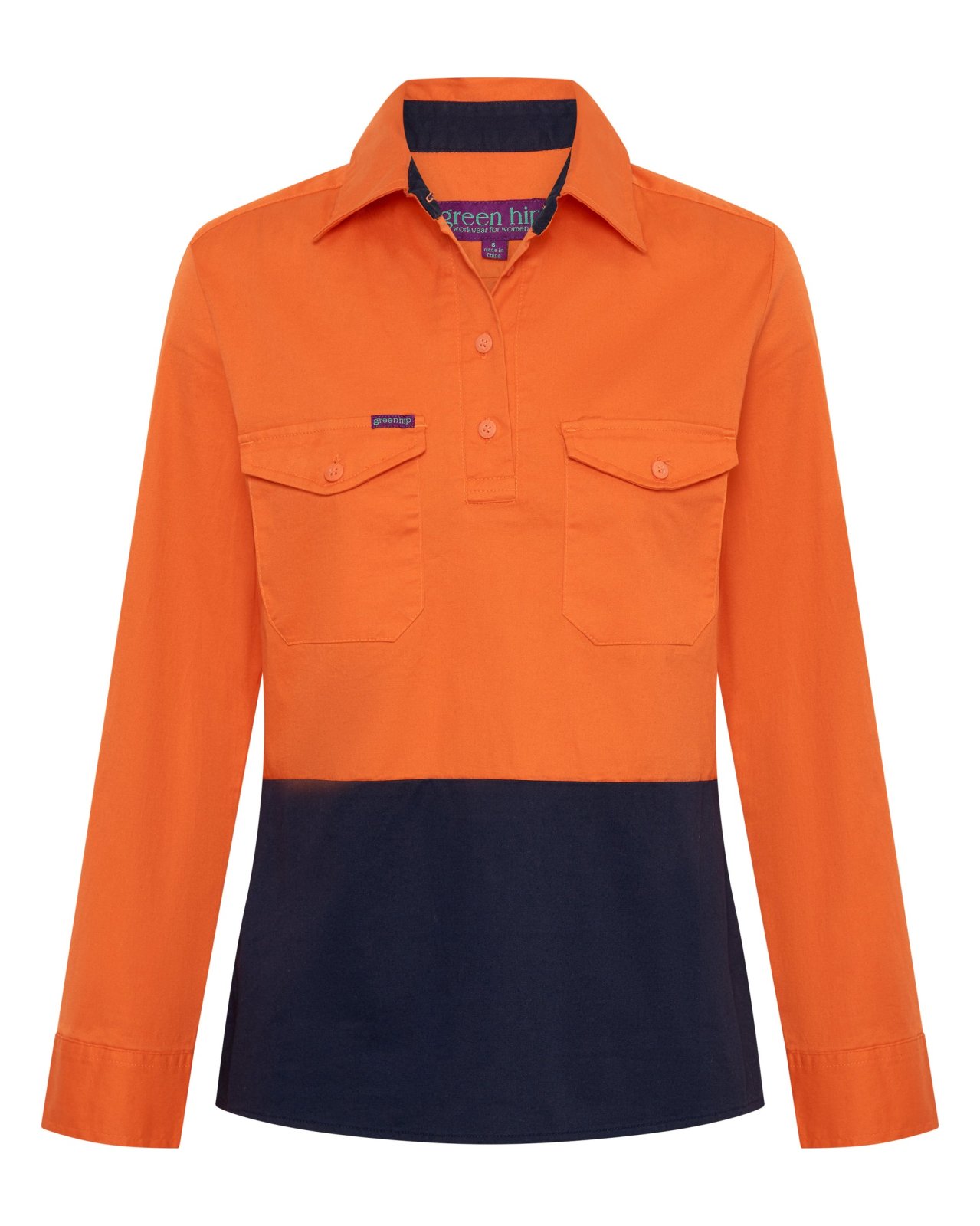
The Light Weight Shirt HiVis Reflective 'The Night Life' offers reflective high-visibility protection in a breathable cotton-stretch build. The Light Weight Shirt Long Sleeve HiVis 'The Sunset Essential' brings hi-vis colour with a back box pleat for extra reach, while the Light Weight Shirt HiVis Two Tone Reflective 'The All Nighter' uses durable stretch reflective tape.
Best for: dawn and dusk mustering, night shifts, and roadside work. Skip if: you only work daylight hours in low-traffic areas.
Check the reflective hi-vis work shirt and the hi-vis long sleeve option to compare fit and features.

| Shirt | Fabric Weight | Sleeve | Best For |
|---|---|---|---|
| Land Roamer short sleeve | 150gsm | Short | Hot-day yard work |
| The Essential long sleeve | 150gsm | Long, 3/4 option | Sun coverage and layering |
| Mid Weight The Essential | 180gsm | Long, 3/4 option | Cold mornings, layering |
| The Night Life reflective | 150gsm | Long | Low-light and night work |
| The Sunset Essential hi-vis | 150gsm | Long | Hi-vis with extra reach |
| The All Nighter two tone | 150gsm | Long | All-night reflective comfort |
Fabric Weight
Why Cotton Work Shirts for Farming Still Win
Cotton work shirts are a common choice for farm work because cotton is breathable and comfortable. A cotton-rich drill twill with a small amount of spandex is designed to move with you. The useful question is which fabric construction wins for which cattle task.
The four fabrics you will actually meet
Cotton drill and twill. A dense, diagonal weave that puts more fibre between you and wire, timber and crush rails.
Cotton-rich stretch blends. Adding a small percentage of spandex gives reach across the shoulders and back without sizing up.
Ripstop. The grid of heavier threads stops a tear from running, which is why it suits scrub, barbed wire and snag-prone yard work.
Synthetics and synthetic-heavy blends. They dry fastest and shed dust, which suits wet, muddy work and overnight washing.
Matching fabric to the task
| Task | Fabric priority | Why |
|---|---|---|
| Mustering in heat | Lightweight cotton-rich stretch (around 150gsm) | Breathes, moves across the shoulders, dries faster than heavy drill |
| Yard work and crush handling | Mid-weight cotton drill (around 180gsm) | Abrasion resistance against rails, gates and beasts |
| Fencing and scrub | Ripstop or heavier cotton | Stops snags becoming tears |
| Wet, muddy conditions | Synthetic-heavy or quick-dry blend | Dries fast, but check odour and heat build-up |
| Cold starts and layering | Mid-weight cotton with a fish-tail hem | Holds warmth, stays tucked when you bend |
A common pattern is to run a lightweight cotton-rich shirt for summer mustering and a mid-weight drill for yard work, rather than expecting one fabric to do both. Because abrasion wears through high-contact areas first, the science of fabric durability helps explain why a tougher cotton weave can earn its place in the yards.
Watch out: a fabric marketed as "breathable" can still be a poor choice if it is synthetic-heavy and you are working still, hot yards, breathability claims are usually measured in moving air, not in a dusty crush pen.
For a deeper look at how these criteria play out across a full workwear wardrobe, our guide to durable workwear for female gardeners applies the same fabric logic to another demanding outdoor job.
Breathable Work Shirts for Outdoor Work in the Heat
Breathable work shirts for outdoor work manage heat through fabric weight and weave, not marketing claims. Lighter fabric at 150gsm moves air and moisture better than a heavy drill, which is why the lightweight range suits hot-day mustering and yard work.
Fit plays a role too. A tailored cut that still leaves room through the back lets air move and keeps the fabric off your skin. Extra centre buttons stop the front pulling open.
Farm Shirt Fabric and Care: Making Them Last
Farm shirt fabric and care decide how many seasons you get from a shirt, but the failures that end a shirt's life in cattle work are specific: abrasion at the shoulder seam, snags at the pocket and placket, and UV degradation of the fabric itself.
A repeatable durability check before and after each season
Run this checklist when you buy and again at the end of each season.
- Seam construction. Look for double-stitched or reinforced shoulder and side seams. A single row of stitching at the shoulder is the first thing to fail when you reach across a crush rail.
- Fabric weight. Around 150gsm suits hot-day movement; around 180gsm suits abrasion-heavy yard work. Below 150gsm, expect faster wear at stress points.
- Closures. Extra front buttons stop the placket gaping when you lean over a beast. Check that buttons are anchored with a shank or cross-stitch, not a single thread.
Care that targets cattle-work failures
Wash in cold water, close the buttons, and hang to dry in shade rather than tumbling. Treat stains early and skip harsh bleach on cotton blends. Wash work shirts separately from heavy canvas items, zips and buckles, overloading the machine abrades fabric against hardware.
Watch out: fabric that has thinned or faded may offer less sun protection than when new.
Safety limits worth knowing
A work shirt is not protective equipment. It offers sun coverage and some abrasion resistance, but it will not stop a crush injury, a needle stick or a chemical splash. Where visibility matters at dawn, dusk or on roadsides, choose a hi-vis option with reflective tape rather than relying on a light-coloured shirt. Where snag hazards are high around machinery, check that sleeves and hems are not loose enough to catch.
Price and Value Across the Range
Value in a cattle-farming shirt is cost per season, not sticker price. A cheaper shirt that fails at the shoulder seam after one winter costs more than a well-built one that lasts several.
| Shirt | Price | Fabric Weight | Value Note |
|---|---|---|---|
| Sunrise All-Rounder hi-vis short sleeve | $45.45 | 150gsm | Lowest entry to hi-vis |
| Mid Weight Land Roamer short sleeve | $45.45 | 180gsm | Imperfect pieces, limited stock |
| Mid Weight The Essential long sleeve | $48.95 | 180gsm | Imperfect pieces, limited stock |
| The Night Life reflective | $50.95 | 150gsm | Reflective at a mid price |
| Land Roamer short sleeve | $64.95 | 150gsm | Core hot-day shirt |
| The Essential long sleeve | $69.95 | 150gsm | Core sun-coverage shirt |
| The Sunset Essential hi-vis | $69.95 | 150gsm | Hi-vis with box pleat |
| The All Nighter two tone | $84.95 | 150gsm | Top of range, full reflective |
The imperfect-piece options are worth knowing about: they may carry minor faults, and are sold at a lower price with limited stock. Note that imperfect, clearance, and discontinued items are not eligible for returns.
Choosing the Shirt That Fits Your Working Day
Choosing the right shirt comes down to matching fabric weight and features to your actual tasks, not buying one shirt for everything.
Size range and fit deserve real attention.
Build the wardrobe around the tasks you do most, then add the specialist options.
Cattle work rewards gear that is built for it, and a shirt that fits properly changes how a long day feels.
Frequently Asked Questions
What should you look for in a durable shirt for cattle farming?
Start with fabric weight and fibre. A 150gsm to 180gsm cotton-rich drill twill balances breathability with abrasion resistance for yard work and mustering. Check for extra front buttons, which help prevent gaping when you bend and reach, and added back length for sun coverage. A tailored fit that still allows a full range of movement matters as much as toughness, because a shirt that restricts your shoulders gets left in the cupboard.
Are cotton work shirts for farming suitable in hot weather?
Yes, when the cotton is lightweight and the weave allows airflow. Lightweight cotton-rich shirts at 150gsm are a suitable choice for summer work. Look for a breathable stretch fabric and a loose enough cut to let air move. For long days in the sun, choose a long-sleeve option with a UPF 50+ rating compliant with AS/NZS 4399 rather than relying on short sleeves and sunscreen alone.
How should you care for farm work shirts so they last longer?
Wash in cold water and turn the shirt inside out. Pre-shrunk fabrics like the ones in this range are designed to hold their shape. Treat stains early, especially cattle yard grime and diesel, and check buttons and seams each wash. Rotating three or four shirts through the week spreads the wear and keeps each one serviceable for longer.
Are lightweight or mid-weight shirts better for farm work?
It depends on the season and the task. Lightweight 150gsm shirts suit hot days, active mustering and long hours in the sun, and they layer easily under a jacket in winter. Mid-weight 180gsm shirts are a heavier option suited to cooler months. Many people keep both in the wardrobe and swap as conditions change, which is cheaper than replacing a single shirt worn year-round.
What makes breathable work shirts for outdoor work comfortable on long days?
A breathable fabric, a fit that follows the body without pulling, and details that stop heat building up. Cotton-rich stretch drill moves with you, extra centre buttons prevent the front opening when you reach or lift, and sleeve tabs let you roll to three-quarter length as the day warms. Added back length keeps the shirt tucked and covered when you bend. Together these small design choices make more difference on an eight-hour day than any single feature.
