

Last Updated: October 23, 2026
Quick Summary
Workwear women need garments cut from a women's pattern block, not men's gear shrunk down, because shoulder width, hip-to-waist ratio and waistband position all change the fit. Measure your natural waist, fullest hip, inseam and thigh, then match those numbers to each brand's own size chart rather than the label.
- Buy to the larger size when waist and hip land in different brackets, then have the waist taken in.
- A 290 gsm cotton drill with 2% spandex resists abrasion while still moving with you.
- Twin-needle stitching at the crotch is the detail to check, since that is where pants fail first.
- A starting capsule of roughly six core garments covers a five-day week with a wash buffer.
- Divide price by realistic wears: a garment worn twice weekly for three years is worn about 300 times.
Table of Contents
- Why Workwear Women Actually Need Different Clothing
- Women's Workwear Sizing: Getting the Fit Right
- Women's Work Pants: Rise, Cut and Fabric Compared
- Durable Workwear for Women: What Makes It Last
- Women's Workwear for Gardening and Outdoor Work
- Building a Work Wardrobe: Capsule Planning and Cost per Wear
- Choosing Workwear Women Can Trust: A Quick Decision Framework
- Frequently Asked Questions
Why Workwear Women Actually Need Different Clothing
Most workwear women are offered is simply men's gear shrunk down and recoloured.
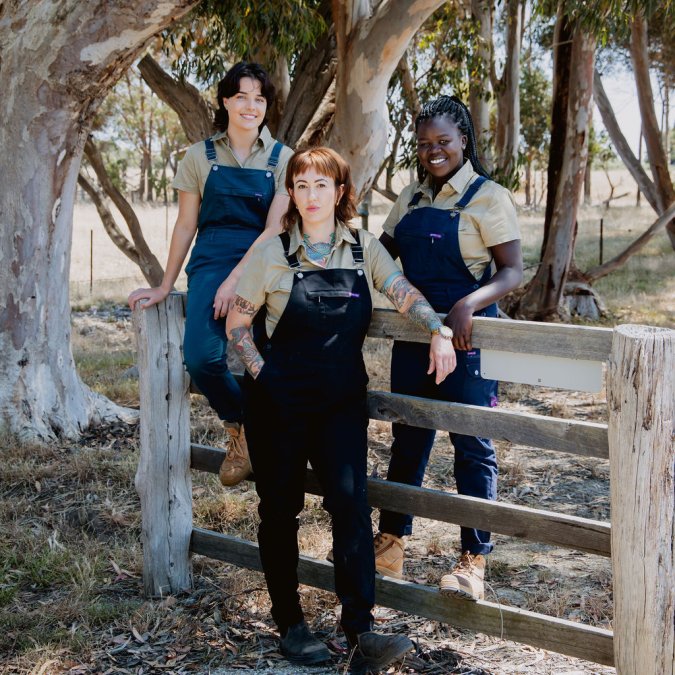
The practical difference shows up fast. A waistband that sits at the natural waist instead of the hip changes how you bend, kneel and reach.
Below, we'll walk through sizing, fabric choice, cost per wear and the categories worth owning, so you can build a wardrobe that works as hard as you do.
Women's Workwear Sizing: Getting the Fit Right
Women's workwear sizing is the measurement set a garment is cut to, and it matters more than the size label on the tag. Two brands can both call something a size 12 and fit completely differently, because each drafts to its own pattern block. The label is a starting point; the measurements are the truth.
Take four measurements, not one
Measure over light clothing, keep the tape snug but not tight, and write the numbers down so you can compare them against any brand's chart:
- Natural waist, the narrowest point of your torso, roughly level with your navel but often higher. Bend sideways; the crease that forms is your natural waist.
- Fullest hip, around the widest part of your seat, feet together.
- Inseam, from the crotch seam to where you want the hem to sit, measured on a pair of pants that already fit you well rather than on your body.
- Thigh circumference, around the fullest part of the upper thigh. This is the measurement most size charts omit and most workwear fits fail on, because a garment cut for movement needs room here before it needs room anywhere else.
If your waist and hip land in different size brackets, buy to the larger of the two and have the waist taken in. Taking in is a straightforward alteration; letting out is not, because there is rarely spare seam allowance.
Match the cut to how you are built
No single cut suits every body, but the pattern is fairly predictable:
- Narrow hips, smaller waist, straighter torso, a high-rise cut with an elastic back band holds position without gaping at the back waistband when you bend.
- Broader hips, fuller seat, waist that fluctuates, a straight or cargo cut with a generous elastic waistband accommodates movement and weight change without digging in.
- Shorter torso, a mid rise often sits closer to the natural waist than a high rise, which can ride up under a tool belt or apron.
- Longer torso, a high rise stops the waistband sitting under the belly when you squat, which is where most work pants feel like they are falling down.
Our Overalls 'All Women' sizing tip is a good example of why the label is not the answer: if you already wear our gear, size down for a more tailored fit. That is brand-specific knowledge you only get from reading the guide rather than assuming your usual retail size carries across.

Plan for alterations before you order
Workwear is cut for movement, so it often runs differently from what you wear on the weekend. Two practical checks save a return:
- Hem allowance, a garment with a generous hem allowance can be let down if you are taller than the chart assumes, or taken up cleanly if you are shorter. Ask before you buy.
- Waist adjustment, an elastic back band or side adjusters buy you a size of tolerance either way, which matters if your weight shifts across seasons or through pregnancy.
Women's Work Pants: Rise, Cut and Fabric Compared
Rise decides where the waistband sits, cut decides how the leg falls, and fabric decides how long any of it lasts. Get all three right and you stop thinking about your pants.
Here is how the main options compare:
| Style | Rise | Cut | Fabric | Best For |
|---|---|---|---|---|
| SKNY Flex 'Every Woman Utility' | High | Tapered, cuff or over-boot | 290 gsm cotton stretch | Active trades, kneeling work |
| Original 'Gardener Gal' | High | Narrow leg | 290 gsm cotton stretch | Gardening, general outdoor work |
| Give Cargo 'Every Bron, Vick and Sally' | Mid | Straight leg | 290 gsm cotton stretch | All-day wear, varied tasks |
All three share a 98% cotton, 2% spandex drill twill at 290 gsm, a soft peach finish, and a hem allowance of 2.5cm to 3cm so you can extend the length. The SKNY Flex adds an un-stitch-me knee pad function, which is genuinely useful if you spend time on your knees.

Mid rise sits lower and suits a straighter torso. High rise holds everything in place when you are bending and reaching all day.
Durable Workwear for Women: What Makes It Last
Durability in workwear comes down to four things: fabric weight, fibre blend, seam construction and how the garment is finished. Everything else is marketing.
At 290 gsm, a cotton drill has enough body to resist abrasion without feeling stiff.
Look for twin-needle stitching at the crotch, because that is where pants fail first. Check for a reinforced hem allowance so you can let the leg down if you need to.
Women's Workwear for Gardening and Outdoor Work
Women's workwear for gardening has to handle kneeling, digging, pruning and whatever the weather does.
Cargo pockets are the quiet hero here. A deep cargo pocket keeps a phone or tools secure while both hands are busy.
Our founder, Liv Thwaites, came to this from horticulture rather than fashion, which shows in details like the adjustable waist on the Overalls 'All Women'.
Building a Work Wardrobe: Capsule Planning and Cost per Wear
A workwear capsule is a small set of pieces that mix together across a week. The goal is fewer decisions in the morning and more wear out of each garment, because a piece that only works with one other item is not really part of a capsule, it is a one-off.
Start from outfit formulas, not a shopping list
A formula is a repeatable combination you can rebuild without thinking. Three that cover most working weeks:
- The kneeling day, high-rise tapered pants, a long-sleeve shirt that stays tucked, and knee pad function. Built for crawling, planting and anything low to the ground.
- The varied-task day, straight-leg cargo pants, a shirt that layers, and a zip pocket for personal items. Handles moving between indoor and outdoor work without a change.
- The heavier or messier day, overalls over a tee, with the action-back bib for bending. One garment, no waistband to think about.
Build your capsule so every top works with every bottom. If a shirt only looks right with one pair of pants, it is not pulling its weight.
The weekly rotation
A practical starting capsule that covers a five-day week with room for a wash cycle:
- Two pairs of work pants in different cuts for different tasks
- One pair of overalls for heavier or messier days
- Two or three work shirts that layer and tuck
- One high-visibility piece if your site requires it
- Accessories that solve a specific problem, like knee pads
That is roughly six core garments. Rotate two pants and two shirts across the week, keep the overalls for the dirtiest day, and you have a wash buffer without owning a drawer full of duplicates.
Cost per wear is the honest comparison
Divide the price by the number of times you will realistically wear it. A cheaper garment that fails in a season costs more per wear than a better one that lasts years.
Our Overalls 'All Women' sit at $169.95, the SKNY Flex pants at $123.95, the Give Cargo pants at $102.95 and the Original 'Gardener Gal' pants at $74.35. Spread across years of wear, the maths usually favours buying once and buying well, but only if the fit is right, which is why the sizing section above matters more than the price tag.

Choosing Workwear Women Can Trust: A Quick Decision Framework
Use this framework to narrow the field before you buy anything.
Step 2: Check the fabric spec. Look for a stated fabric weight, fibre blend and any UPF rating.
Step 3: Read the size guide, not the label. Measure yourself, then match to the brand's own chart.
For bulk orders across a team, ask about consistency of supply and reordering before you commit.
Frequently Asked Questions
How should women's workwear fit?
Workwear for women should fit closely enough to move safely but leave room to bend, kneel and reach without pulling. Check the waistband sits flat when you squat, the rise covers your lower back, and the leg length clears your footwear. Look for adjustable waists and stretch fabrics, which let one garment handle weight changes and pregnancy. If you are between sizes, size down for a tailored fit in stretch cotton styles, and always test the fit by squatting and lifting before you commit.
What fabrics are best for durable workwear for women?
Cotton drill with a small amount of elastane, usually around 98% cotton and 2% spandex, balances toughness with stretch. A mid-weight fabric near 290 gsm holds its shape through repeated washing while staying breathable in heat. Pre-shrunk finishes stop garments shrinking after the first wash, and a peach finish softens the fabric without weakening it. Check for twin-needle stitching at high-stress seams such as the crotch, and look for a UPF 50+ rating if you work outdoors.
How do I choose women's work pants for my body shape?
Start with rise, then cut. A high rise with a back elastic waistband suits narrow hips and longer inseams because it stays put when you bend. Mid rise straight-leg cargo styles suit fuller hips and give generous pocket space. A narrow-leg cut works well if you prefer a cleaner line, while a tapered leg tucks neatly into footwear. Many brands offer a small hem allowance, usually 2.5cm to 3cm, so you can extend the length if your inseam runs long.
How do you care for workwear so it lasts?
Wash workwear inside out in cold water and skip the dryer, which breaks down stretch fibres faster than anything else. Zip pockets and close buttons before washing to stop snagging, and wash heavily soiled gardening gear separately. Repair small tears and loose seams early rather than waiting for them to spread. Rotating two or three pairs through the week gives each garment time to recover its shape, and that rotation is the single biggest factor in how long stretch cotton workwear stays comfortable.
Buying workwear women can rely on comes down to fit, fabric and construction, in that order. Green Hip Workwear For Women designs every piece by women, for women, using soft cotton stretch fabric cut for a tailored fit, with UPF 50+ protection tested to AS/NZS 4399 and a tree planted for every garment purchased. Start with one pair of pants that matches your main task, wear them hard, and build from there. Shop now and find the fit that finally works for your body and your workday.
