

Table of Contents
- Why Work Pants Designed for Curves Matter
- High-Waisted Work Trousers: The Foundation of Curvy Fit
- Lightweight Stretch Work Pants: Comfort Without Compromise
- Workwear Fit Guide for Women: Getting Your Measurements Right
- Curved Waistband Technology and Tailored Fit
- Durability and Safety Standards for Active Work
- Silhouettes That Flatter: Tapered, Wide-Leg, and Utility Options
- Frequently Asked Questions
Last Updated: September 27, 2026
Why Work Pants Designed for Curves Matter
Finding work pants for curves that actually fit shouldn't require a shopping expedition that leaves you frustrated and exhausted. Yet for women with curves, wider hips, a fuller waist, or a pronounced hip-to-waist ratio, standard workwear often feels like an afterthought, designed for bodies that don't reflect the reality of the workforce.
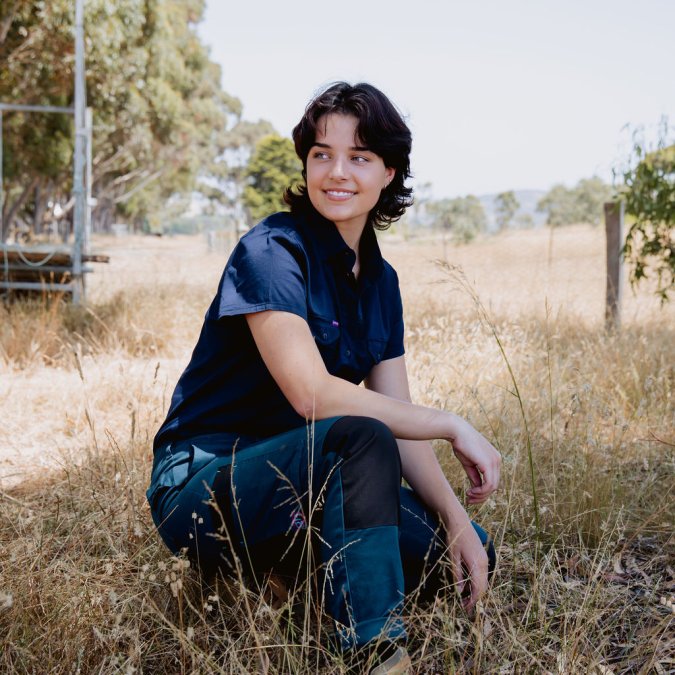
The difference between pants that fit and pants that don't goes far beyond comfort. When your work pants pull at the waistband, gape at the back, or restrict movement through the hips, you're spending energy managing your clothing instead of focusing on your job. That's wasted effort. Women's work pants for curves are engineered to solve this problem by acknowledging that bodies come in different shapes, and workwear should accommodate them without compromise.
At Green Hip Workwear For Women, we've built our entire approach around this principle. Our pants are designed by women, for women, with attention to the specific fit challenges that curvy bodies face on the job site, in the garden, or anywhere work happens. The result is clothing that moves with you, stays in place, and lets you get on with your day.
High-Waisted Work Trousers: The Foundation of Curvy Fit
High-waisted work trousers form the foundation of proper fit for curvy bodies. A higher waistline sits above the natural waist and hip curve, distributing pressure evenly across the abdomen and hips rather than concentrating it at a single point. This design prevents the common problem of gaping at the back or pulling across the front.
The waistband itself matters enormously. A curved waistband technology, rather than a straight waistband, follows the natural contour of a woman's body. This eliminates the uncomfortable gap that often appears between the back of a standard pant and the lower back. Our High Rise Pants SKNY Flex feature a signature elastic waistband designed specifically to accommodate the hip-to-waist ratio variations that curvy bodies naturally have.

High-waisted trousers also provide better coverage and security during active work. Whether you're bending, reaching, or moving through tight spaces, a higher waistline keeps you covered and prevents the constant tugging and adjusting.
High-Rise vs. Mid-Rise: Which Suits Your Body Shape
High-rise trousers sit at or above the natural waist, typically 10-12 centimetres above the hip bone. Mid-rise trousers sit lower, around 7-9 centimetres above the hip bone. For curvy bodies, high-rise is often the better choice because it provides more coverage, prevents gapping, and distributes fit pressure across a wider area of the torso.
However, mid-rise can work well if you have a shorter torso, prefer a less restrictive feel at the waist, or find high-rise uncomfortable during pregnancy or when your body changes seasonally. The key is understanding your own proportions and what feels secure during movement.
Our Mid Rise Pants Give Cargo offer generous elastic in the waistband and a straight leg cut that works well for bodies with balanced proportions or those who prefer a lower waistline. The choice between high-rise and mid-rise ultimately depends on your comfort, your specific body shape, and the type of work you do. Test both if you can, your preference may surprise you.
Lightweight Stretch Work Pants: Comfort Without Compromise
Stretch fabric is non-negotiable for work pants designed for curves. A fabric that moves with your body, rather than resisting movement, makes the difference between pants you can work in and pants you tolerate. Lightweight stretch work pants use a blend of natural fibres and elastane to provide both durability and flexibility.
The best stretch fabrics for workwear maintain their shape over time, resist pilling, and don't lose elasticity after repeated washing.
Why Stretch Fabric Matters for Curvy Bodies
Stretch fabric accommodates the natural variation in your body throughout the day. As you move, bend, and sit, your body shape shifts slightly. Fabric with 2-4% elastane (spandex) gives enough give to move with those changes without bunching or becoming baggy. For curvy bodies specifically, stretch allows the fabric to conform to fuller curves without creating stress points or seams that pull uncomfortably.
Stretch also means you can size more accurately to your actual measurements rather than sizing up to accommodate restricted movement. This improves fit and reduces bulk.
Breathable and Durable: The Cotton-Stretch Advantage
Cotton-stretch blends, typically 98% cotton and 2% spandex, offer the best balance for workwear. Cotton is breathable, naturally moisture-wicking, and durable enough for daily work. The small percentage of spandex provides the stretch without compromising the fabric's integrity or making it feel synthetic.
A 290 gsm (grammes per square metre) cotton-stretch drill twill, like the fabric used in our High Rise Pants SKNY Flex and Mid Rise Pants Give Cargo, is heavy enough to withstand wear, washing, and abrasion while remaining comfortable in warm weather. This weight also means the fabric holds its shape better than lighter alternatives.
High Rise Pants SKNY Flex ‘Every Woman →

Workwear Fit Guide for Women: Getting Your Measurements Right
Accurate measurements are the foundation of finding work pants that fit. Many women guess at their size or rely on past purchases, which often leads to poor fit. Taking proper measurements takes five minutes and eliminates most fit problems.
Measuring Your Hip-to-Waist Ratio
Your hip-to-waist ratio is the key to understanding which silhouettes and fits will work best for your body shape. Measure your natural waist (the narrowest point around your torso, typically just above your belly button) and your hips (the fullest part of your hip and bottom area, usually 20-25 centimetres below your waist).
Subtract your waist measurement from your hip measurement. If the difference is 20 centimetres or more, you have a pronounced curve. This means you'll benefit most from high-waisted trousers with curved waistband technology that accommodates the difference. If the difference is 10-15 centimetres, mid-rise or high-rise can both work depending on your preference and torso length.
Write down both measurements and keep them handy when shopping. Most sizing guides use these two numbers as the primary fit indicators, and they're far more reliable than generic size labels.
Inseam Length and Tailoring Options
Inseam length is measured from the inside of your thigh, down the inner leg, to your ankle. Many women overlook this measurement, assuming their height determines their inseam. In reality, inseam varies widely based on your leg length relative to your torso.
To measure inseam, wear flat shoes and have someone measure from your inner thigh to just above your shoe.
Curved Waistband Technology and Tailored Fit
Curved waistband technology is the engineering detail that separates work pants designed for women from work pants that happen to come in women's sizes. A curved waistband follows the natural contour of a woman's body rather than sitting in a straight line. This prevents the gap that often appears at the back waistline and distributes pressure evenly across the hip and waist area.
Durability and Safety Standards for Active Work
Work pants need to withstand the demands of actual work. Whether you're crawling through garden beds, working with animals, or moving between tasks on a construction site, your trousers need to resist tearing, maintain their fit after repeated washing, and protect your skin from hazards.
Reinforced Stitching and Industrial-Grade Fabric
Reinforced stitching, particularly twin-needle stitching at stress points like the crotch seam, extends the life of work pants significantly. This technique uses two parallel lines of thread instead of one, creating a stronger seam that resists fraying and holds up to repeated stress and movement.
Workwear Compliance and UPF Protection
UPF 50+ protection is a compliance standard that matters if you work outdoors. UPF (Ultraviolet Protection Factor) 50+ means the fabric blocks at least 98% of ultraviolet radiation. This protection is built into the fabric itself, not applied as a coating, so it persists through washing.
Silhouettes That Flatter: Tapered, Wide-Leg, and Utility Options
The silhouette of your work pants affects both how you look and how you move. Different silhouettes suit different body types and work environments.
Frequently Asked Questions
What makes work pants for curves different from standard workwear?
Work pants designed for curves feature a curved waistband that sits comfortably over hips without gapping, stretch fabric that moves with your body, and a tailored fit that accounts for hip-to-waist ratio differences. Standard pants often have a straight waistband that gaps at the back and restrict movement through the hips. Designed-for-curves styles use 98% cotton with 2% spandex, ensuring durability while providing flex technology that prevents strain on seams and fabric during active work.
Should I choose high-waisted or mid-rise work trousers for a curvy figure?
High-waisted work trousers provide full coverage and support for curvy figures, preventing gaps and offering a flattering silhouette. They work best if you have a pronounced hip-to-waist ratio. Mid-rise options suit those who prefer less coverage or have a smaller waist-to-hip difference. Both styles can feature elastic waistbands and stretch fabric. Your choice depends on your body shape, comfort preference, and the demands of your role, try both to see which feels right for your work environment.
What features should I look for in lightweight stretch work pants?
Look for 98% cotton with 2% spandex blend for durability and flex. Check for utility pockets with reinforced stitching, a breathable fabric weight around 290 gsm, and UPF 50+ protection if you work outdoors. Ensure the waistband is elastic or curved to prevent gapping, and verify that seams are twin-needle stitched for extra strength. Pre-shrunk fabric helps maintain fit after washing, and moisture-wicking properties keep you comfortable during active work.
How do I know if work pants will fit my specific body type?
Measure your waist, hips, and inseam accurately using a soft tape measure. Know your hip-to-waist ratio to choose between high-rise and mid-rise styles. Check the product fit guide and sizing chart carefully, many retailers offer 2.5-3 cm hem extensions to customise length. Read customer reviews mentioning your body type or similar measurements. Look for brands that offer easy returns if fit isn't right, and consider ordering multiple sizes if you're uncertain. A tailored fit should feel snug but not restrictive through the hips and thighs.