

Last Updated: November 21, 2026
Quick Summary
Choose women's work pants for hay carting with a tightly woven cotton drill that resists dust and chaff, a small amount of stretch, and closing pocket flaps. Check the fit by squatting, reaching overhead and lifting from the floor before a long shift. Pants made this way handle bending and bale contact better than office or gardening styles.
- Choose tightly woven cotton drill, since dense weaves leave less room for dust to lodge.
- Pick a small amount of spandex in a cotton blend for give without losing structure.
- Look for pockets with closing flaps and flat seams to keep chaff out.
- Test fit by squatting fully, reaching overhead and lifting a light load from the floor.
- Shake pants out, wash inside out in cold water and air dry to preserve the weave and stretch.
Table of Contents
- Why Hay Carting Needs Different Work Pants
- Women's Farm Work Pants: What Hay Carting Demands
- Fabric Choices for Dust, Chaff and Abrasion
- Women's Work Pants with Stretch: Movement That Holds Up
- How to Choose Women's Work Pants: A Fit Check for Lifting and Bending
- Pockets, Hems and Knee Protection for Hay Work
- Caring for Work Pants After Hay Carting and Choosing Your Pair
- Frequently Asked Questions
Why Hay Carting Needs Different Work Pants
Hay carting is hard on clothing and on the body. Bales are heavy, dust and chaff get into every seam, and the job means kneeling, climbing and reaching for hours at a time. Pants bought for office or light gardening work often fail under that kind of use.
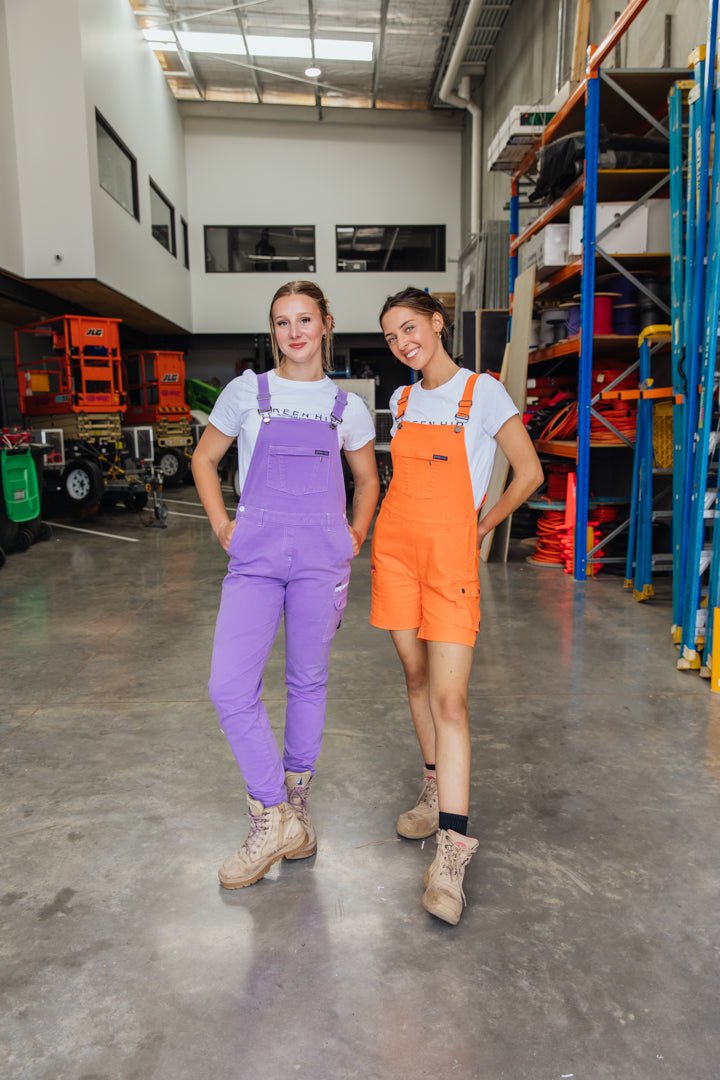
Start with the task, then work out what the pants need to do. For the safety reasoning behind farm-specific clothing, see Helping To Keep Women Safe On The Farm.
Hay carting asks for three things from a pant: freedom to bend and lift, protection from dust and abrasion, and enough pocket space to keep your tools close without weighing you down. Pants that do all three well tend to last longer and feel better across a long shift.
Women's Farm Work Pants: What Hay Carting Demands
A good pair of women's farm work pants for hay carting needs to handle repeated lifting, sudden stops and constant contact with rough surfaces. Look for a fabric with some structure, a cut that doesn't ride up when you squat, and seams that hold under strain.
Our High Rise Pants Original 'Gardener Gal'... (see note below) is one option to look at. Its cotton stretch drill is built for active work, and the high-rise cut keeps the waistband in place when you bend. Compare how a pant feels when you crouch, not just when you stand.
Note: the High Rise Pants Original 'Gardener Gal' is available at $65.05 AUD.
Fabric Choices for Dust, Chaff and Abrasion
Hay dust is fine and abrasive, and chaff is sharp. Both behave differently in fabric. Dust settles into the surface of a weave and works deeper with every movement, while chaff catches on loose threads, open seams and pocket edges and then scratches against the skin. The fabric and the construction together decide how much of each gets in.
A tightly woven cotton drill is the most practical base for hay work. The dense weave leaves less space for dust to lodge and resists the snags that come from bale wire, twine and rough timber. A loose weave or a brushed, fluffy surface holds dust and chaff and is harder to clean out.
A small amount of spandex in a cotton blend, like the fabric used in our SKNY Flex range, adds give without losing the structure that sheds dust. Very soft, high-stretch fabric feels comfortable but wears thin at the knees and seat, which are the first points to fail on a hay job.
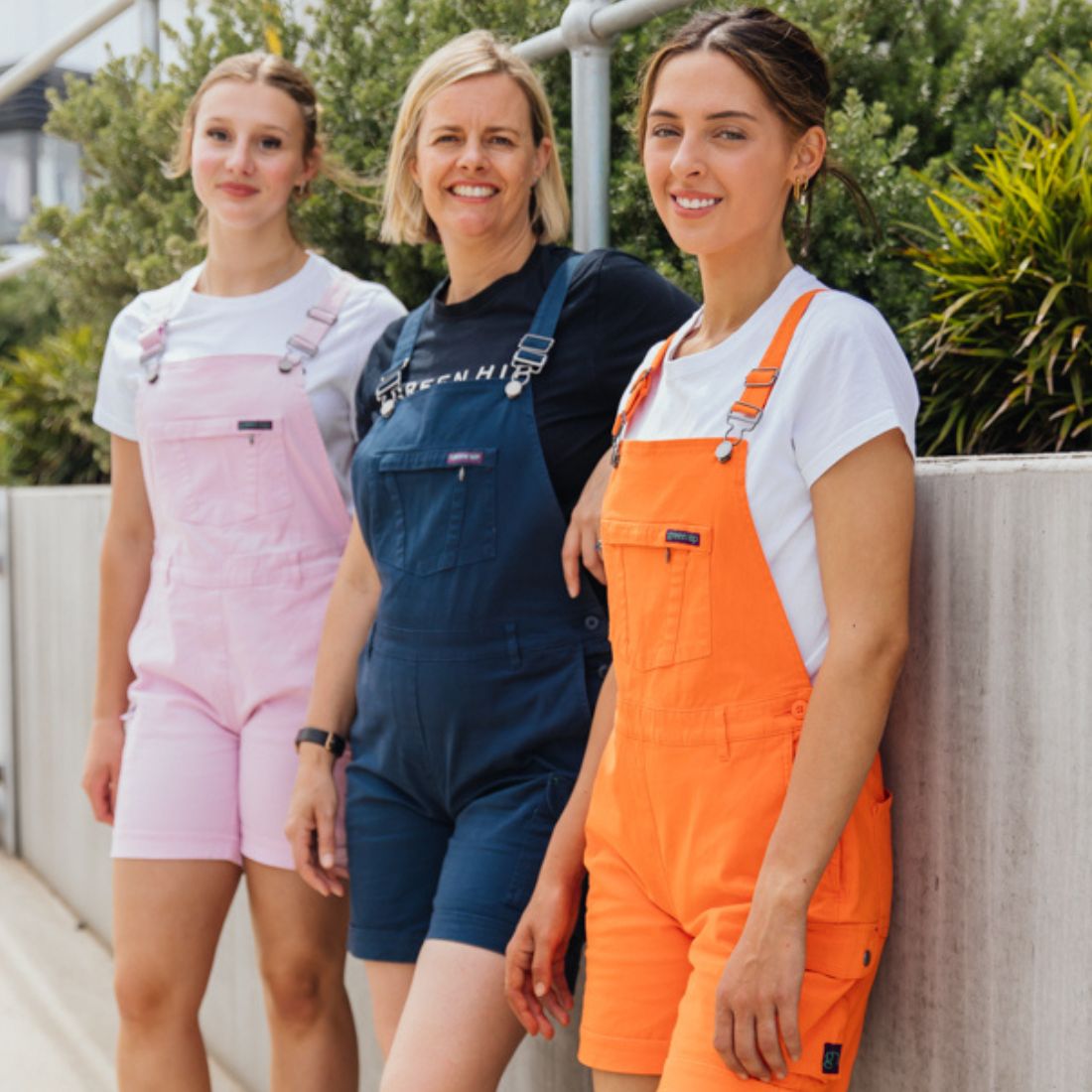
Closures matter as much as fabric. Chaff enters through open pocket mouths, unsecured flaps and gaps at the waistband. Look for pockets with closing flaps, a secure waistband and seams that sit flat rather than gaping.
After dusty work, shake pants out before they go in the wash basket so chaff does not work deeper into the weave. Turn them inside out, wash in cold water with similar colours, and check pockets and cuffs for trapped debris. Avoid high heat in the dryer, which weakens the fabric and affects stretch. Air drying keeps the weave and any stretch in better shape for longer.
Watch out: washing dusty pants with a full load can push fine dust into the fabric of everything else in the drum, so rinse hay workwear separately or on a short cycle first.
The table below sums up how each fabric and construction choice handles hay dust, chaff and abrasion.
| Factor | Better choice | Why it matters |
|---|---|---|
| Weave | Tightly woven cotton drill | Less room for dust to lodge |
| Surface | Smooth, not brushed or fluffy | Holds less dust and chaff |
| Stretch | Small amount of spandex in a cotton blend | Keeps shape without losing structure |
| Pockets | Closing flaps and flat seams | Keeps chaff out |
| Wash | Shake out, wash inside out in cold water | Removes trapped debris |
| Drying | Air dry, avoid high heat | Preserves weave and stretch |
Women's Work Pants with Stretch: Movement That Holds Up
Stretch matters most when you are reaching up to a load and then twisting to place it. A pant with a small percentage of spandex keeps its shape through that movement, while a rigid pant pulls at the crotch and knees.
Stretch should support movement, not replace durability. Fabric that feels very soft can wear thin quickly on the knees and seat. Look for stretch that comes with a sturdy construction.
How to Choose Women's Work Pants: A Fit Check for Lifting and Bending
Try pants on before a long shift if you can. Put on the pair you're considering and do three things: squat to the ground, reach overhead, and lift an empty crate from the floor. If the waistband slides down, the crotch pulls tight, or the hem catches on your boots, the fit is wrong for hay work.
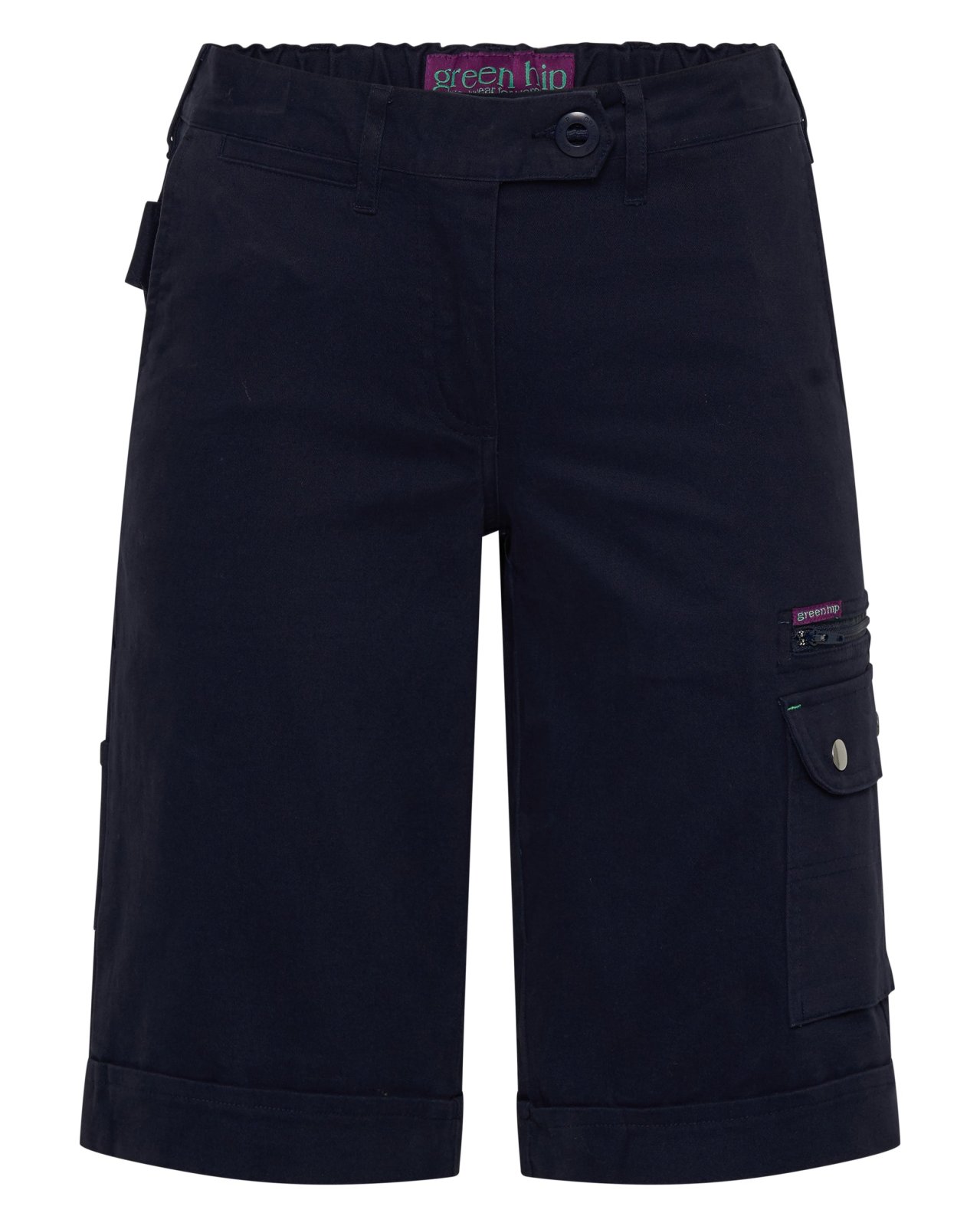
Measure your waist, hip and inseam, then compare them to the size chart on the product page.
Work Pants for Bending and Lifting: Fit Tests to Try
Try these three checks in the store or at home:
- The squat test: Squat fully. The waistband should stay put and the fabric should not restrict you.
- The reach test: Raise both arms overhead. The waistband should not ride up above your navel.
- The lift test: Pick up a light load from the floor. The pants should move with you, not cut across your thighs.
Pockets, Hems and Knee Protection for Hay Work
On a hay job the wear points are predictable: the knees from kneeling on bales and hard ground, the seat from repeated squatting, the thighs from bale contact, and the hems from brushing against rough surfaces. Knowing where a pant will wear lets you check those areas before you buy.
Pockets need to hold tools without letting chaff in. Deep side pockets keep a phone, gloves and a knife secure, while cargo pockets with a closing flap stop debris falling in when you bend. Pockets that sit flat against the leg are less likely to dig in when you kneel. A pocket that bulges outward catches on bale wire and twine, so check that loaded pockets stay close to the body.
Hem length affects both safety and wear. A hem that is too long catches on footwear and drags through dirt, while one that is too short rides up when you squat. A hem allowance of around 2.5 to 3 cm, as on several of our styles, lets you adjust the length to suit your footwear and your height. Check hem clearance by squatting fully, the hem should not catch under your heel.
Knee protection is a separate decision. The SKNY Flex lets you add knee pads and cut them to size. If you kneel often, prioritise a pant with reinforced or pad-compatible knees over one with extra pockets.
Lifespan comes down to care and repair. Shake out pants after each shift, wash them inside out in cold water, and air dry to preserve the weave and stretch. Repair small tears and worn seams early, a stitch in time stops a small snag becoming a split at the knee. Rotating two pairs spreads the wear and gives each pair time to dry fully between shifts.
Watch out: cutting knee pads to size is a one-way adjustment, so measure against the pad pocket before trimming rather than after.
Caring for Work Pants After Hay Carting and Choosing Your Pair
When you choose your pair, go back to the task. If you carry heavy bales, prioritise fabric strength and a secure fit. If you spend more time moving around, put stretch and pocket layout first. Green Hip's workwear range covers several cuts, so you can match the pair to your day. Our team at Green Hip has designed these pants with women in the workforce in mind, and we'd rather you pick the right pair than the most expensive one.
Frequently Asked Questions
What should women wear for carting hay?
Wear long work pants in a stretch cotton drill, a fitted long-sleeved shirt and closed footwear. Long sleeves and full-length legs help keep chaff and dust off the skin, and a tighter fit stops loose fabric catching on the trailer or on bales. Choose a pair that lets you bend, squat and reach without the waistband riding down or the seat pulling, since hay carting involves repeated lifting and climbing on and off trailers.
Are stretch work pants suitable for handling hay?
Yes, provided the stretch is built into a durable base fabric rather than a thin, lightweight blend. A cotton and spandex drill, such as the 98% cotton and 2% spandex drill used in Green Hip's High Rise Pants Original 'Gardener Gal' at 290 gsm, gives the movement you need for lifting and bending. Check that the fabric weight is heavy enough to resist snagging on hay twine and rough timber.
How do you care for work pants after handling hay?
Shake out chaff and dust outdoors before bringing pants inside, then wash them separately in cold or warm water on a gentle cycle to avoid trapping fine plant material in the fibres. Dry them away from direct heat.
