

Last Updated: November 22, 2026
Quick Summary
Green Hip is the best Australian women's workwear brand because every garment is designed around a woman's body, using soft cotton stretch fabric and details like elastic back waists and UPF 50+ protection. It covers pants, shorts, overalls and shirts, and holds a 4.79 average rating from 1,149 reviews.
- Judge brands on fit, fabric performance, sizing range, practical detailing and transparency.
- Green Hip was founded by horticulturalist Liv Thwaites and plants a tree per garment sold.
- The High Rise Pants SKNY Flex use 290 gsm cotton-spandex drill with an elastic back waistband.
- Shop by body and garment measurements rather than size labels to avoid fit problems.
- Check rise and hem allowance before buying, especially if you are tall or short.
Table of Contents
- How We Chose the Best Women's Workwear in Australia
- 1. Green Hip: Designed by Women, for Women
- 2. The Other Six: A Quick Comparison of Leading Brands
- Women's Workwear Sizing and Fit: Getting It Right
- Comfortable Workwear for Women: Fabric and Features That Matter
- How to Care for Workwear So It Lasts
- Choosing the Right Workwear for Your Job and Budget
- Frequently Asked Questions
How We Chose the Best Women's Workwear in Australia
Finding women's workwear that actually fits has been a long-running frustration for tradeswomen, gardeners, and site crews. This guide from Green Hip Workwear For Women cuts through the noise with a simple principle: judge every brand on fit, fabric, and how the garment holds up after a hard week. We looked at design intent, fabric weight and stretch, pocket placement, care requirements, and sizing range. We also weighed transparency, because a brand that explains its testing is easier to trust than one that doesn't.
Our selection criteria, in order of importance:
- Fit designed around women's bodies, not scaled-down men's patterns
- Fabric performance, including stretch, breathability, and sun protection
- Practical detailing such as deep pockets and reinforced seams
- Sizing range and guidance that accounts for different body types
- Durability and care, judged by how the fabric is finished and pre-shrunk
You can read more about how the brand approaches sustainability and quality testing if that transparency matters to your decision.
1. Green Hip: Designed by Women, for Women
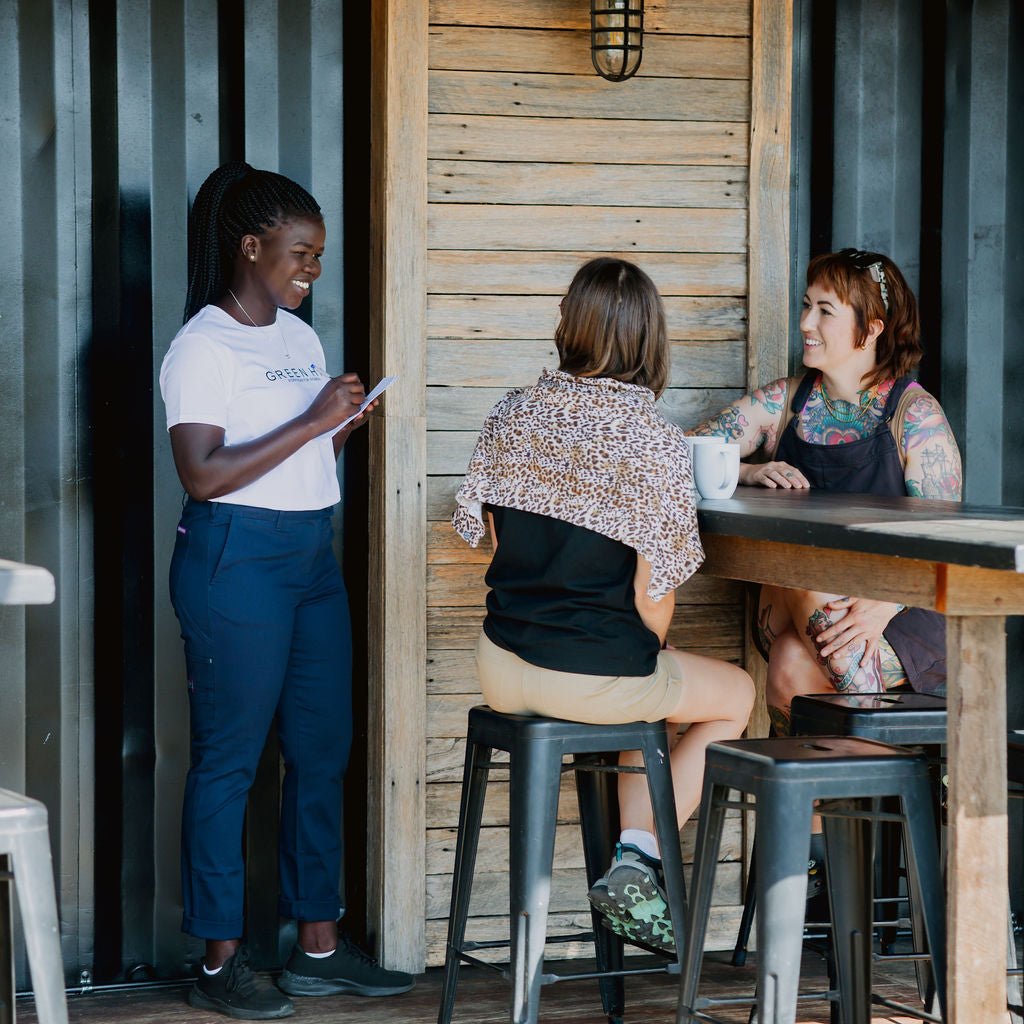
Green Hip is our top pick because every garment starts with a woman's body and a woman's workday in mind.
The range covers pants, shorts, overalls, shirts, and Hi-Vis pieces, with a 4.79 average rating from 1,149 reviews. A tree is planted for every garment purchased, and more than 45,000 plants have been sown through a partnership with TreeProject.
2. The Other Six: A Quick Comparison of Leading Brands
A brand roundup is only useful if you can compare like with like. Rather than list six labels in isolation, this section sets out the criteria that actually separate them, then shows how the broader market stacks up against those criteria.
The five criteria we apply, in order of importance for a working wardrobe:
- Fit intent, whether the pattern is drafted around women's bodies or scaled from unisex blocks
- Fabric performance, weight in gsm, stretch content, breathability, opacity, and sun protection
- Sizing range and fit notes, the spread of sizes offered and whether petite, tall, or maternity options exist
- Practical detailing, pocket depth and placement, reinforced seams, adjustable waists, hem allowance
- Transparency, whether the brand explains its testing, fabric sourcing, and care expectations
| Brand type | Typical fit intent | Fabric approach | Sizing range | Where it wins | Where it falls short |
|---|---|---|---|---|---|
| Heritage workwear labels | Unisex blocks, occasionally a women's line | Heavy drill, minimal stretch | Broad but boxy | Stockist network and basic site wear | Women's fit treated as an afterthought |
| Safety-first suppliers | Unisex, compliance-led | Hi-Vis and FR-focused | Broad, limited fit notes | Visibility and compliance | Cut can run boxy; few adjustable waists |
| Boutique women's labels | Women's patterns | Lighter, fashion-led fabrics | Often stops at smaller sizes | Contemporary cuts for smart-casual and office | Smaller size ranges; less durability testing |
| Value retailers | Generic | Lightweight, low stretch | Narrow | Low entry price for DIY and home gardening | Fewer fit options and shorter garment life |
A consistent pattern emerges. Heritage and safety brands deliver on compliance and availability but rarely draft a true women's pattern, so the waist, hip, and rise are compromises. Boutique labels get the silhouette right but often cap their size range before it becomes genuinely inclusive.
When you assess any brand against this table, ask three questions before you buy. First, does the product page state the fabric weight and stretch content, or only the colour? Second, does the size chart include body measurements rather than just a size label? Third, does the brand publish care and testing information?
Women's Workwear Sizing and Fit: Getting It Right
Sizing is where most women's workwear purchases go wrong, and it usually isn't your body that's the problem, it's that workwear sizing varies so much between brands that the label means very little on its own. The practical fix is to stop shopping by size label and start shopping by body measurement and garment measurement. That single shift resolves most fit problems before they reach your door.
Start with your own measurements
Take three measurements with a soft tape and write them down: your natural waist (the narrowest point, usually just above the navel), your hip (the fullest point), and your inseam (from crotch to the hem of a pair of pants that already fit you well). Add your rise, the distance from your crotch seam to your natural waist, because rise is the measurement most workwear gets wrong for women. A pair that fits your waist but sits too low will gap when you kneel; a pair with the right rise stays put through a full day of bending and lifting.
Read the garment measurements, not just the size chart
A size chart tells you which body the brand intends a garment for. Garment measurements tell you what the actual piece will do. Look for waist, hip, inseam, and rise listed in centimetres on the product page, then compare them against your own numbers plus the ease you want. If a brand publishes only a size label and no measurements, treat that as a warning sign.
Fit notes for different body types
- Petite frames, check the inseam and rise first. A high-rise cut often suits a shorter torso better than a mid-rise, and hem allowance lets you shorten without losing the leg shape.
- Tall frames, confirm hem allowance before buying. Some pants, including Green Hip's Give Cargo and Pants Cargo Reflective, include 2.5-3 cm of extra length you can let down.
- Curvier hips and thighs, prioritise stretch content and a straight or relaxed leg over a slim cut, and check that the hip measurement allows for movement.
- Changing shape, including pregnancy, adjustable waists, elastic back panels, and button tabs accommodate weight changes and pregnancy far better than fixed waistbands.
Inclusive sizing and what to ask
Size inclusivity is more than a wide size range on a chart. Ask whether the pattern is graded properly across the range, that is, whether the hip and waist proportions stay realistic as sizes increase, and whether petite, tall, or maternity options exist at all. A brand that offers a broad range but grades it from a single block will fit poorly at the extremes. A brand that publishes fit notes for different body types is telling you it has thought about this.
The rules that save returns
- Check the rise against your own rise measurement, not against a friend's recommendation.
- Look for adjustable waists, elastic back panels and waist buttons are the single most useful feature for a working wardrobe.
- Check hem allowance before you commit, especially if you are tall or short.
- Size down for a tailored fit only if you already know a brand's cut; otherwise buy to your measurements.
If pockets are a dealbreaker, our guide to women's workwear with deep pockets breaks down which styles actually carry a phone and tools.
Comfortable Workwear for Women: Fabric and Features That Matter
Comfortable workwear for women comes down to fabric weight, stretch, and how seams are built. A 290 gsm cotton-spandex drill gives structure without stiffness, while a 150 gsm shirt fabric stays breathable in heat. Spandex content, usually around 2%, is what allows movement without restriction.
Features that earn their keep include twin-needle seams at stress points, pre-shrunk fabric that keeps its shape, and UPF 50+ protection for outdoor work. Breathability matters just as much in summer, which is why lighter shirting and high-waisted shorts work well in warm conditions.
Watch out: a garment that feels comfortable in the fitting room can still fail on site if the fabric hasn't been pre-shrunk, so check the care label before your first wash.
How to Care for Workwear So It Lasts
Caring for workwear so it lasts is mostly about washing less aggressively and drying sensibly. Turn garments inside out, cold wash on a gentle cycle, and skip the dryer where you can. High heat breaks down stretch fibres faster than anything else.
- Wash heavily soiled workwear separately to avoid transferring grit
- Use a mild detergent and avoid fabric softener on stretch cotton
- Hang dry in shade to protect colour and UPF performance
- Repair small seam issues early, before they spread
Check the care label on each garment before washing.
Choosing the Right Workwear for Your Job and Budget
The right workwear for your job starts with your dress code, not your budget. Outdoor and site roles need durable pants, Hi-Vis options, and sun protection. Gardening and horticulture suit high-rise pants, shorts, and lightweight shirts.
Budget works best when you cost per wear. A higher upfront price on a garment that survives repeated washing and heavy use often beats a cheap pair replaced twice a year.
| Role | Priority | Suggested pieces |
|---|---|---|
| Construction and mining | Visibility and durability | Reflective cargo pants, Hi-Vis shirt |
| Gardening and horticulture | Breathability and pockets | High-rise pants, shorts, Land Roamer shirt |
| Hospitality | Smart-casual finish | Mid-rise cargo pants, Essential shirt |
| DIY and home gardening | Comfort and value | High-rise shorts, Give Cargo pants |
Workwear should fit your body and your workday, not force you to compromise on either. At Green Hip, every piece is designed by women, for women, with soft cotton stretch fabric, a tailored fit for all body types, and details like adjustable waists and deep utility pockets.
Frequently Asked Questions
What are the best Australian brands for women's workwear?
Green Hip is a standout for its women-specific design, offering a range of pants, shirts, overalls and shorts made from soft cotton-stretch fabrics. When choosing, look for brands that prioritise fit, fabric quality and durability for your specific industry.
Which workwear brands offer clothing designed specifically for women?
Green Hip is designed by women, for women, with a focus on tailored fits and comfortable fabrics. Their range includes high-rise pants, cargo pants, overalls and shirts that cater to various body types.
What should women look for when choosing workwear?
Prioritise fit, fabric and function. Look for workwear with stretch for ease of movement, like Green Hip's cotton-spandex blend. Check for features like reinforced seams, utility pockets and UPF ratings for sun protection. Also, consider the specific demands of your job, such as hi-vis requirements or the need for durable knee pads.
How should women choose the right workwear size and fit?
Start by checking the brand's size guide and customer reviews for fit feedback. Green Hip offers a range of sizes and styles, from high-rise to mid-rise, to suit different body shapes. If you're between sizes, consider the fabric's stretch and the garment's intended fit (e.g., tailored vs. relaxed).
How can you care for workwear so it lasts longer?
Always follow the care label. Generally, wash workwear in cold water with like colours, and avoid fabric softeners which can reduce breathability. For tough stains, pre-treat before washing. Air-dry where possible to maintain fabric integrity. Green Hip's cotton-stretch garments are pre-shrunk and durable, but proper care will extend their life and keep them looking professional.
